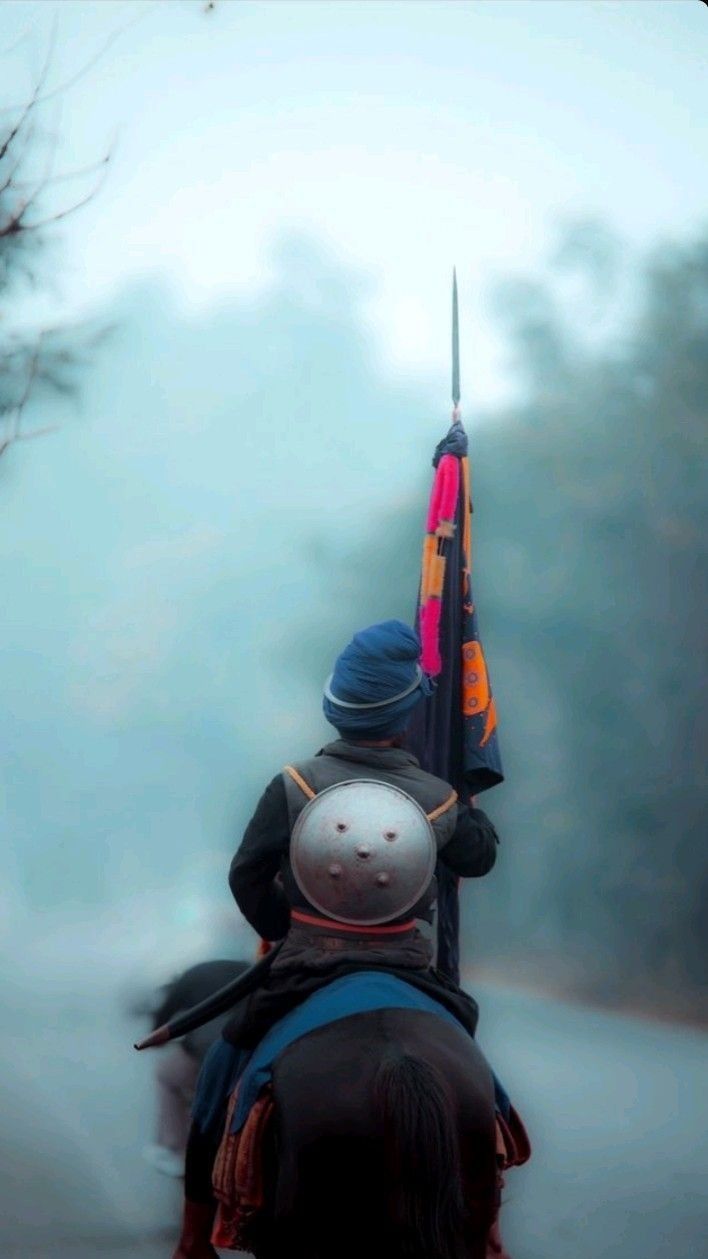
“O waters of the Sarsa, do not surge— Flow gently today, for a brave soul passes through…” When one travels uphill from Anandpur Sahib, a seasonal stream appears in the Ropar region. Originating from the hills of Solan, it flows toward the Malwa plains and is known as the Sarsa. In reality, the Sarsa was not a major river but merely a seasonal stream. Without going into much depth, it was here—on the banks of the Sarsa—that the entire family of the Guru was separated from one another, a separation so profound that they never reunited. It is said that Guru Sahib told the Sarsa that it would never rise again. Those who live near the Sarsa know its present condition—its state has become almost hellish. Industries established in the Nalagarh, Baddi, and Barotiwala areas have severely damaged it. On the banks of this very Sarsa stands a historic shrine known as Gurdwara Parivar Vichhora Sahib. Earlier, the Gurdwara stood right beside the river, but today the Sarsa flows far behind it. The land here is exceptionally beautiful. Though it lies in the Malwa region, a blend of Puadhi and Doabi dialects is spoken. I have traveled across nearly all of India, yet the peace, joy, and spiritual bliss found on the sacred land of Takht Sri Anandpur Sahib cannot be found anywhere else in the world. Every grain of this soil carries the fragrance of my Kalgidhar Patshah. The choice of the Tenth Guru was truly unique. In the same way, the land of Paonta Sahib is also extraordinarily serene and beautiful. — Harpreet Kaur Bal
Please log in to comment.