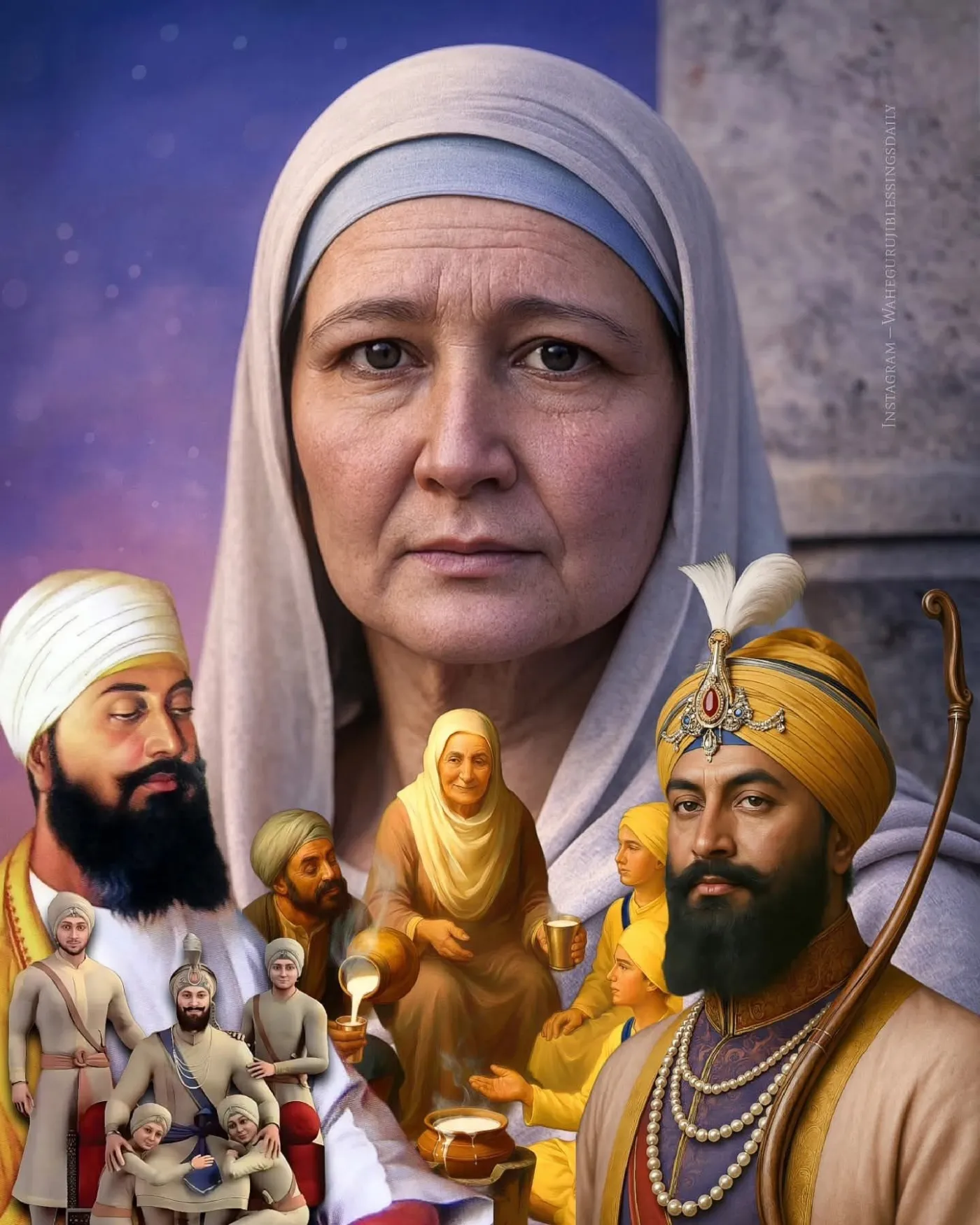
After the martyrdom of the younger Sahibzadas—Baba Zorawar Singh Ji and Baba Fateh Singh Ji—and Mata Gujri Ji, the Sikh community shall remain eternally indebted to Seth Todar Mal Ji, who spent an immense fortune from his own wealth to ensure that their sacred bodies were protected from desecration and cremated with full honor and dignity. At that time, the land was considered among the most expensive in the world, and purchasing it required extraordinary courage and wealth. To meet this great and historic need of the moment, Diwan Todar Mal Ji stepped forward. He paid the price by standing approximately 78,000 gold coins upright on the land, thereby fulfilling his duty toward the Guru’s household and becoming an immortal figure in Sikh history. Todar Mal Ji was one of the distinguished jewels of Emperor Akbar’s court. He is believed to have been born in the village of Chuhiyaan in the Lahore district, in the home of a poor Khatri named Shri Bhagwati Das. Some historians state that he was born in present-day Laharapur, Uttar Pradesh, while others associate him with the village of Kakra, Block Bhawanigarh, District Sangrur. Regardless, he was highly intelligent and rose through scholarship to become Akbar’s Diwan. The revenue regulations he formulated were greatly admired by Emperor Akbar. Todar Mal was also a brave general and played a prominent role in the Bengal campaign. He was the first to introduce Persian in place of Hindi for official administrative work. In 1576, he was appointed Governor of Lahore. Todar Mal is counted among Akbar’s Nine Gems and was granted the title of ‘Raja.’ He served as Akbar’s Finance Minister and was a poet in both Persian and Hindi. One of his compositions is as follows: (The original poetic verses have been retained as provided.) To perform the cremation of the martyrs, Diwan Todar Mal Ji purchased a piece of land at a very high price from a landlord named Chaudhary Atta. He paid for the land by standing gold coins (ashrafis) upon it. Seth Todar Mal Ji himself arranged the cremation of these three martyrs. For this reason, he is held in the highest reverence within the Sikh world. Todar Mal Ji was also known as ‘Shahjahani,’ and the emperor conferred upon him the title of ‘Rai.’ Initially, he was permitted to maintain 100 cavalry and 200 infantry soldiers, which expanded by 1648 to 2,000 cavalry and 4,000 infantry. By 1650, not only Sirhind but also the provinces of Dipalpur, Jalandhar, and Sultanpur were under his administration. From the revenues, he personally received an annual income of five million tankas. The palace in which he lived was called the ‘Jahazi Haveli,’ as its structure resembled a sea vessel. Diwan Todar Mal was a wealthy merchant of Sirhind. It is said that after the martyrdom of Guru Gobind Singh Ji’s younger Sahibzadas, he purchased land at a great cost for the cremation of the Sahibzadas and Mata Gujri Ji. He considered it a great act of virtue to provide water from a reservoir built at Rajatal to quench the thirst of travelers journeying from Agra to Lahore. As a result of the recognition gained through this service, he was awarded the title of ‘Diwan’ in 1582. Diwan Todar Mal was a prominent courtier of Emperor Akbar—religious, compassionate, and renowned for his expertise in agricultural reforms. Bhai Todar Mal Ji, Bhai Raman Ji, Bhai Triloka Ji, Balian da Pathan, and Bhai Moti Ram Ji along with his family were among those present at the time of the final rites of the Sahibzadas and Mata Gujri Ji.
Please log in to comment.