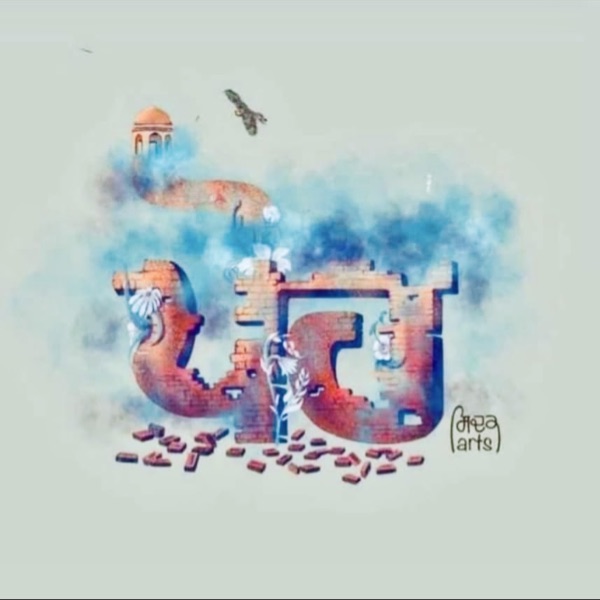
On 8 August, it will be 100 years since the Guru Ka Bagh Morcha took place, but the memory is still fresh in our hearts today. Sardar Piara Singh Padam Ji narrates how our elders accepted martyrdoms and arrests peacefully. Let us take a brief look at the history. The Mahant (caretaker) of the Gurdwara Guru Ka Bagh was Sundar Das. A year earlier, an agreement had been reached with the Sikh Committee, and the Mahant had taken Amrit (Sikh initiation) and agreed to serve under the Committee. Seeing the government’s harsh treatment of the Singhs, the Mahant also changed his stance. He thought he could now reclaim the property. On 8 August, five Singhs went to the land of Guru Ka Bagh, which was already under the Committee’s management as per the agreement, to collect firewood. No one objected, and the Mahant did not file a complaint. However, Bedi Brij Lal informed the police, who on 9 August arrested the five Singhs and, on 10 August, sentenced them to six months in prison. The government’s action was unjust because the Committee members were taking firewood from the Gurdwara’s own land for the Guru’s Langar (community kitchen). Even the government had no valid reason, but it deliberately wanted to create trouble so that the Akalis could be sent to jail. If the act was illegal, then police action should have been taken only on the Mahant Sundar Das’s report. The truth is, the British government had its own malicious intentions and was finding excuses to suppress the non-cooperative Sikhs. From 10 to 22 August, the police remained silent, and no arrests were made. Then, as per higher orders, arrests began on 22 August. Mr. Dunt, Deputy Commissioner of Amritsar, arrived from Shimla on 25 August with special instructions, and beatings also began. On 26 August 1922, during a meeting of the Shiromani Committee’s executive members, S. Mehtab Singh (President), Bhagat Jaswant Singh (General Secretary), Prof. Sahib Singh (Joint Secretary), S. Sarmukh Singh Jhabal (President Akali Dal), Master Tara Singh, Baba Kehar Singh Patti, and S. Ravel Singh were all arrested. The government increased the police presence at Guru Ka Bagh and adopted a policy that any Singh coming for firewood or otherwise should be severely beaten with sticks. The Singhs declared in a large gathering at the Akal Takht that “Guru Ka Bagh belongs to the Sikh nation. If the government does not withdraw its interference, the peaceful satyagraha movement will continue.” At this time, the government, having relaxed pressure on the civil disobedience movement, was confident it could break the Sikh spirit through beatings, but its assumption proved wrong. On 30 August, a jatha (group) of about 60 Sikhs left for Guru Ka Bagh. When night fell, they slept along the way, but the police beat them even in their sleep. From 31 August onwards, jathas of 100 Sikhs left daily after prayer at the Akal Takht. On the way, they were brutally beaten—pulled by their hair and left unconscious. Later, the Committee sent motor cars to take the injured to hospitals. Three hospitals were operating at the time, with a daily expense of 3,000 rupees, but despite such brutality, no Singh broke his vow of peaceful protest. On 2 September, Pandit Madan Mohan Malaviya personally witnessed this unique satyagraha and expressed admiration and sympathy. On 3 September, Muslims offered prayers for the satyagrahi Sikhs at Khair Din’s Mosque. On 9 September, the police removed the checkpoint and stopped roadside beatings, and the jatha reached Guru Ka Bagh directly. Mr. B.T. (Deputy Superintendent of Police) had the Singhs beaten severely, but their sacrifice and religious fervor were unmatched—they chanted “Waheguru, Waheguru” while being beaten and sometimes even said, “Give us more blows.” Such spirit won admiration from non-Sikhs as well. The newspaper Muslim Outlook wrote on 7 September 1922: “As long as the beating continued, the drum kept sounding; the Akalis sat on the ground and were beaten on their backs, legs, ankles, and other parts. The beating was extremely cruel and inhuman—it could not be watched.” Dr. Khan Chand Deva praised the Akalis’ mental strength: “These Akalis were not made of mere flesh and bones, nor did they have an ordinary human soul. Their physical and spiritual strength was truly beyond measure.” Similarly, Khilafat Committee leader Mirza Yaqoob Beg, who treated the injured for a long time, wrote: “Sikhs are the toughest people in Punjab. If such a beating had been given to any other community, they would have been deeply distressed. I did not see anyone crying out in pain or trying to save themselves from the blows. It was clear that there was oppression in the police, but God resided in the Akalis.” On 12 September, Reverend C.F. Andrews personally witnessed the beatings and told the Governor of Punjab that hundreds of Christ-like figures were daily enduring crucifixion, teaching the world new lessons of peace and courage. On 13 September, Governor Sir Edward MacLagan visited Guru Ka Bagh. On his orders, the beatings stopped, and arrests began. By then, about 1,300 arrests had been made. Initially, jathas of 20 Singhs went daily, and from 10 October, groups of 100 went daily. On 25 October, under the leadership of Risaldar Anoop Singh Ji, a jatha of 100 retired Sikh soldiers went. People from far and wide, Hindus and Muslims, came to witness the Morcha and condemned the government. Even the descendants of Sayyid Buddhu Shah offered themselves for the satyagraha. The arrested Singhs were sent to distant jails because Punjab’s prisons were overflowing due to government oppression. On 30 October 1922, during the Morcha, a train carrying imprisoned Singhs was being taken to Attock Jail. The Sikhs of Panja Sahib decided to serve milk and water to their hungry brothers. When the station master refused to stop the train, some Singhs sat in front of it, declaring, “Even if our bodies are crushed, we must serve our hungry brothers.” The engine hit them, stopping the train. Bhai Partap Singh (treasurer of Gurdwara Panja Sahib) and Bhai Karam Singh, who was on pilgrimage, were martyred on the spot, and six others were badly injured. Everywhere, the spirit of sacrifice was overflowing. On one hand, the Singhs were enduring the blows of B.T.’s sticks; on the other, they were facing down a train engine. For Sikhs, faith was clearly more precious than life. The Guru Ka Bagh satyagraha, beatings, and arrests ended on 17 November, when the defeated government asked Sir Ganga Ram to take the land of Guru Ka Bagh on lease. This was merely an excuse. Ganga Ram signed the lease and told the police, “Go, I don’t need you.” Thus ended the Guru Ka Bagh Morcha. A total of 5,605 Singhs were imprisoned, including 30 members of the Shiromani Committee. These were the religious warriors of the Akali Dal and Shiromani Committee who gave everything for the honor and dignity of the Guru and the Guru’s institutions. Don’t mistake today’s Badal family for such warriors. — Jorawar Singh Tarsikka.
Please log in to comment.