Gurgaddi Gurpurab Sri Guru Harigobind ji
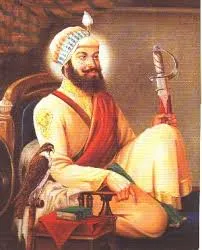
A short distance from the sacred city of Amritsar, known as the City of the Gurus, lies the village of Guru Ki Wadali. It was here that the Sixth Sikh Guru, Sri Guru Hargobind Sahib Ji, was born to Sri Guru Arjan Dev Ji and Mata Ganga Ji on Harh Vadi 7, Samvat 1652 Bikrami (1595 CE). Because of this blessed event, the village came to be known as Guru Ki Wadali.
From an early age, Guru Arjan Dev Ji entrusted the upbringing and education of young Hargobind Ji to Baba Budha Ji. Along with spiritual and scriptural studies, Baba Budha Ji encouraged him to learn martial arts and the use of weapons. In 1603, Baba Budha Ji was formally assigned responsibility for his education and military training. Guru Hargobind Sahib developed a deep interest in warfare and quickly became highly skilled. Impressed by his abilities, Baba Budha Ji affectionately referred to him as a mighty warrior.
Guru Sahib married Mata Damodari Ji, Mata Nanaki Ji, and Mata Mahadevi Ji (Marwahi). He was blessed with five sons—Baba Gurditta Ji, Baba Suraj Mal Ji, Baba Ani Rai Ji, Baba Atal Rai Ji, and Baba Teg Mal Ji (later Guru Tegh Bahadur Ji)—and one daughter, Bibi Viro Ji.
Guru Sahib was especially pleased when Sikhs offered horses or weapons to the Guru’s house. He encouraged them to combine meditation on God with physical strength and courage. The Sri Akal Takht Sahib, today recognized as the highest of the five Sikh Takhts, was established by Guru Hargobind Sahib Ji with the assistance of Baba Budha Ji and Bhai Gurdas Ji.
On 5 July 1606, Guru Sahib asked Baba Budha Ji to present him with two swords. He explained that these swords were worn according to the wishes of Guru Arjan Dev Ji. One represented Miri (temporal authority) and the other Piri (spiritual authority).
Two swords were girded: one of Miri and one of Piri.
One symbolized dignity and sovereignty, the other the protection of the people.
Guru Sahib declared that the Sikh tradition would unite the qualities of both the saint and the soldier. He taught that a true saint can also be a brave soldier, and a true soldier should possess the virtues of a saint. Before this, spirituality and military power were generally viewed as separate paths. Guru Sahib brought them together into a unique and balanced philosophy.
He instructed Sikhs to carry arms, practice horsemanship, and train in warfare while continuing their devotion and meditation. He further emphasized that religion and governance should remain connected, but political action must always be guided by moral and spiritual principles.
In 1606, Prince Khusrau, the son of Emperor Jahangir, rebelled and fled toward Punjab. Religious extremists convinced Jahangir that Guru Arjan Dev Ji had supported Khusrau. As a result, Guru Arjan Dev Ji was arrested. Before his martyrdom, he entrusted the Guruship to Guru Hargobind Sahib Ji, who was only about eleven years old at the time.
After the martyrdom of Guru Arjan Dev Ji, Guru Hargobind Sahib adopted a policy of armed resistance against oppression. He instructed Sikhs to contribute not only their dasvandh (tithe) but also quality horses and weapons to the Guru’s cause. Training in military skills was organized, and a disciplined Sikh force gradually emerged.
Under the supervision of brave warriors such as Bhai Bidhi Chand, young Sikhs were trained in hunting, horsemanship, and combat. Hundreds of young men from the Majha, Malwa, and Doaba regions joined Guru Sahib. Even many Muslims, neglected by the ruling authorities during difficult times, enlisted in the growing Sikh army.
Guru Sahib fought four major battles and emerged victorious in each. The first battle took place at Ruhela on 27 September 1621. It arose from disputes involving Bhagwan Das Gherar and his family, who had unlawfully occupied land belonging to the Guru’s house. During the conflict, Bhagwan Das, his son Ratan Chand, and Chandu’s son Karam Chand were killed.
Following Jahangir’s death in 1627, Shah Jahan became emperor and gradually came under the influence of orthodox elements. History bears witness that whether it was Zakariya Khan, Mir Mannu, Ahmad Shah Abdali, or the Government of India in 1984, many powers sought to weaken the Sikh community by targeting Sri Akal Takht Sahib. Yet, with the passage of time, the stature and influence of the Akal Takht only continued to grow.
Guru Hargobind Sahib Ji traveled widely to spread Sikh teachings and guided people away from superstition, empty rituals, and social evils. In 1635, Dara Shikoh became Governor of Punjab and was known for his religious tolerance. As a result, a relatively peaceful period continued until 1644, allowing Sikh teachings to flourish.
Knowing that his earthly mission was nearing completion, Guru Sahib passed the Guruship to his grandson Guru Har Rai Ji. On 3 March 1644, at the age of 49, Guru Hargobind Sahib Ji merged with the Divine Light.
Join the conversation
Sign in to comment or join the discussion.

Loading comments…