

Shaheedi Gurpurab Sri Guru Arjan Dev ji
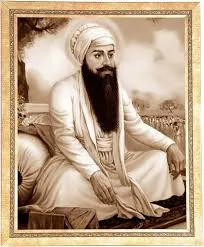
On this day in 1606 A.D., we observe the martyrdom day of Sahib Sri Guru Arjan Dev Ji. Countless salutations to the martyrdom of Guru Sahib Ji.
The embodiment of peace, patience, humility, and benevolence, the fifth Guru, Dhan Sri Guru Arjan Dev Ji, completed 416 years since his martyrdom today. Yet the spirit of inspiration that the Sikh Panth receives from Guru Ji’s martyrdom remains just as strong even today.
Guru Arjan Dev Ji was the youngest son of the fourth Guru, Sri Guru Ram Das Ji. He was born on April 15, 1563 A.D., to Mata Bhani Ji, in the house of Sri Guru Ram Das Ji at Goindwal.
Guru Arjan Sahib spent his childhood in the company of the Guru and the sangat. Because of this, virtues such as service, remembrance of God, wisdom, respect, discipline, love, benevolence, humility, and a peaceful nature were received by him as a spiritual inheritance. Impressed by the depth of Gurbani and his poetic style, Guru Amar Das Patshah said, “Dohita Bani Ka Bohitha,” meaning that his grandson would be the ship of Gurbani. Similarly, the Bhatts praised him in Bani and wrote:
“Tai janmat gurmat brahm pachhanio”
Meaning, O Guru Arjan Ji, from childhood itself you recognized the Supreme Divine through the Guru’s wisdom.
The fifth Patshah served the needy without discrimination during the famine in Lahore and removed the feelings of division between “our own” and “others.” By compiling the Adi Guru Granth Sahib, he brought to life the ideals of equality, the rejection of high and low status, and religious harmony. He also had many wells and baolis constructed.
In Sikhism, Guru Ji taught Sikhs fearlessness, the courage to sacrifice themselves for truth and justice, and completely stopped them from following Sakhi Sarwar worship and idol worship. For the spread of the faith, preaching centers were opened in distant areas.
The growing spread of Sikhism and the compilation of Sri Guru Granth Sahib were, in reality, the two main reasons behind the martyrdom of Sri Guru Arjan Dev Ji. At that time, the ruler Jahangir was a strict Muslim emperor, and around him there was strong influence of sectarian clerics who were jealous of Sikhism and wanted Guru Sahib removed from their path.
Jahangir was looking for an opportunity. During those days, Jahangir’s son Khusrau rebelled and marched toward Lahore with his forces. While crossing the Beas, it is possible that he went to Goindwal to meet Guru Arjan Dev Ji. Later, when Jahangir arrested Khusrau, he issued orders to arrest every person who had associated with Khusrau.
Under this order, Guru Arjan Dev Ji was also arrested. Slanderers like Chandu and certain Brahmins, who were jealous of Guru Ji, made false accusations and had a case filed against him. Guru Ji entrusted Hargobind Ji with the responsibility of Guruship under the mission of Miri-Piri.
Orders were issued to torture Guru Ji to death. Satguru Ji was placed in boiling water and then made to sit on a burning hot plate, while hot sand was poured over his head. He was repeatedly asked to convert his religion, but Guru Ji did not agree and continued to endure suffering for the sake of humanity.
Seeing this suffering, Sain Mian Mir could not bear it. In anger, he said, “Guru Ji, these tyrants have placed you in fire. The skin of your body is burning. If you command, I will shake the foundations of the courts of Lahore and Delhi.” Guru Ji refused to show any miracle and refused to appeal to any royal court.
A poet beautifully expressed Guru Ji’s reply to Sain Ji:
Mian, leave attachment to the body,
What if the body is burning?
We remain at peace through the Name of the Lord.
Martyrs are the treasure of a nation. Their death becomes the life of the nation. Another poet writes:
The death of a martyr
Is the life of the nation;
That life is life indeed,
And that death too is life.
Guru Ji’s mind was vast and full of patience. Though his body had been tortured severely, he had no complaint against the Will of Akal Purakh. Teaching the world, he explained that sorrow and happiness are two aspects of life, and a person should always be ready to accept both. One should not only desire permanent comfort, nor should one complain against the Will of God:
Nanak, it is useless to complain
And ask only for comfort while avoiding pain.
Happiness and sorrow are like two garments
That every human being must wear at the Lord’s door.
It seemed as though, even while sitting on the burning hot plate, these words were echoing from the mouth of the “embodiment of peace”:
Your actions are sweet to me, O Lord;
Nanak begs only for the treasure of the Lord’s Name.
Finally, after many days of severe torture, stones were tied to Guru Ji’s body and he was cast into the River Ravi. On this day in 1607 A.D., Guru Arjan Dev Ji merged with the Divine Light.
In this way, the great sun of Sikhism, while teaching the world the noble virtues of peace, harmony, purity, coolness, love, benevolence, and martyrdom, may have set in physical form, but as Divine Light, he became immortal forever.
Waheguru Ji Ka Khalsa, Waheguru Ji Ki Fateh.
Join the conversation
Sign in to comment or join the discussion.

Loading comments…