

A Multi-Dimensional Reflection on the Martyrdom of Guru Arjan Sahib Ji (1563 – 1606 A.D.) — Part 1
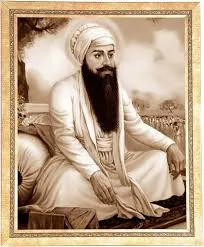
Martyr: A martyr is a great warrior and a sacred personality who, out of love for God or God’s creation, and while accepting the Divine Will with joy, struggles for the welfare of the world and for the good of others; or one who sacrifices their life for a high and pure principle.
The fifth Patshah, Guru Arjan Dev Ji, attained martyrdom after enduring extremely terrifying and heart-shaking tortures. In doing so, he laid the foundation of the tradition of martyrdom in Sikh history and earned the honour of being called the “Crown of Martyrs.”
Ancient historians have described the personal enmity of Diwan Chandu Shah as the main reason behind Guru Ji’s martyrdom and the adoption of such a cruel method of punishment. However, the reality and the main causes were deeper. Prithi Chand and Chandu Shah were certainly minor reasons behind Guru Ji’s martyrdom, but the main causes of the Satguru’s martyrdom were:
The Mughal emperor Jahangir, who was addicted to wine and indulgence, and who wanted to firmly establish his empire.
The hardline Muslim Sheikh Ahmad Sirhindi, who was the main leader of the Naqshbandi order of Islam.
The unholy alliance of his followers, who wanted to establish Islamic rule, and other related forces.
To understand the martyrdom of Guru Arjan Dev Ji, the real causes behind it, the method of punishment, and the true guilty parties, we must briefly study the pages of history.
The Political, Religious, Social, and Mental Condition of Indian Society at the Time of Guru Nanak Sahib’s Arrival
At the time of the arrival of Sri Guru Nanak Dev Ji in this world, Indian society was divided by the varna-ashram system, meaning caste divisions. The people were oppressed by the priestly class and badly suppressed by political power. Evils such as casteism, untouchability, ideas of purity and impurity, jealousy, hatred, and resentment had taken a terrible form in society. As a result, the mental condition of society had become extremely painful and pitiable.
Women had no respected place in society and were considered the property of men. To reform such a condition, Sri Guru Nanak Dev Ji taught the principles of Naam Japna, meaning adopting Divine virtues and wisdom, Kirat Karni, honest labour, and Vand Chhakna, sharing with others. At the same time, to remove the walls of hatred and discrimination from people’s minds and to spread feelings of mutual love, cooperation, unity, and equality, he laid the foundations of the institutions of Sangat and Pangat.
These two institutions did not only awaken the spirit of equality between the ruler and the poor, but also implemented the idea of the unity and equality of humanity in a practical form, thus beginning a major transformation in society.
The Persian language of the state and the Sanskrit language, regarded as divine by the priestly class, were beyond the understanding and reach of ordinary people. Common people had no right to receive education or to study Sanskrit, which the priestly class considered sacred.
Guru Nanak Dev Ji adopted the Punjabi language spoken by ordinary people. In this way, he rejected the languages of state power and the priestly class and promoted the language spoken by the people. He preached equal rights for women and men and made women aware of their equal status.
Under the pretexts of ritual impurity and purity, the priestly class prohibited women from entering Hindu temples and performing worship. Guru Nanak Dev Ji made women aware of their rights, removed this superstition from people’s minds, and explained to humanity by saying:
“Why call her inferior, from whom even kings are born?”
(Mahalla 1, Page 473)
To those who were oppressed by caste, to the poor, and to those who had been labelled as so-called low caste, Guru Ji gave honour and love by saying:
“Among the lowly, the lowest of the low,
Nanak stands with them;
Why should he compete with the great?”
(Mahalla 1, Page 16)
“In the world hereafter, caste has no power; worldly strength has no force there.”
(Mahalla 1, Page 469)
“That alone is one’s caste and honour, according to the deeds one performs.”
(Mahalla 1, Page 1330)
Guru Ji also rejected the superstition of ritual impurity in this way:
“If ritual impurity is to be believed, then impurity exists everywhere;
Even in dung and wood, there are living beings.”
(Mahalla 1, Page 472)
“The impurity of the mind is greed;
The impurity of the tongue is falsehood;
The impurity of the eyes is to look with evil desire upon another’s spouse, wealth, and beauty.”
(Mahalla 1, Page 472)
The principles of Sikhi struck a powerful blow against Brahmanical rituals and completely rejected the unjust division of caste. In this way, from the time of Guru Nanak Sahib, because of its unique, distinct, and welfare-oriented principles, Sikhi spread far and wide.
Join the conversation
Sign in to comment or join the discussion.
A Multi-Dimensional Reflection on the Martyrdom of Guru Arjan Sahib Ji (1563 – 1606 A.D.) — Part 2
Sri Guru Nanak Dev Ji knew that the great transformation he had initiated in society would require much work to bring it to completion, and that…
Continue in the Nitnama app
Loading comments…