

jyoti jyot Gurpurab Sri Guru Nanak Dev ji
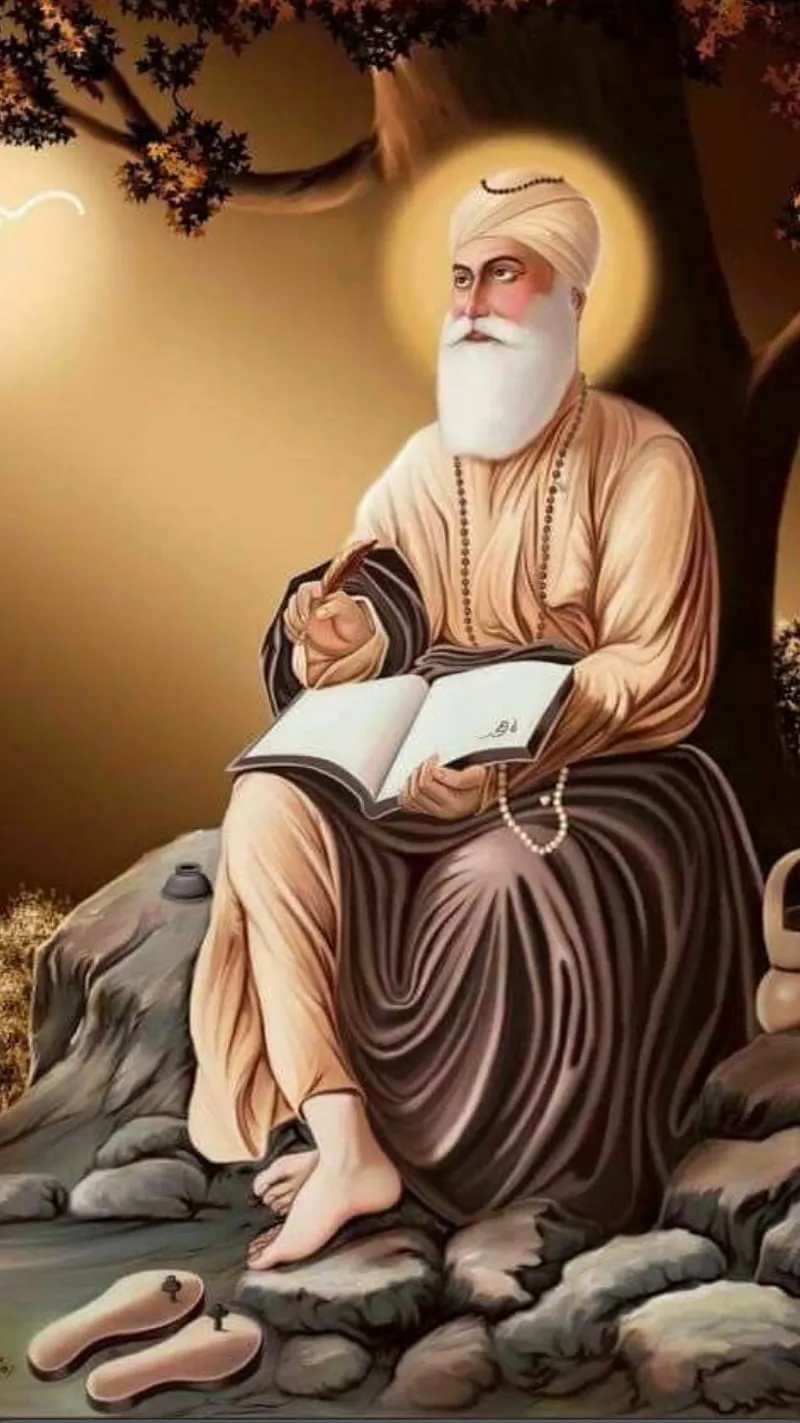
Guru Nanak Sahib Ji merged into the Eternal Light at Kartarpur Sahib, the sacred settlement that Satguru Ji had established in Samvat 1561.
After travelling through many lands and regions to spread the teachings of the Sikh faith, Satguru Ji made Kartarpur Sahib his permanent residence in Samvat 1579.
Bhai Gurdas Ji writes:
“Baba came to Kartarpur and laid aside the garb of an Udasi.
He put on the clothes of a householder and, seated on the spiritual seat, revealed his mission.”
Bhai Doda and Duni Chand, also known as Karori Mal, played an important role in establishing this settlement. They helped develop the village for Satguru Ji and had a Dharamsala constructed there.
Baba Lehna Ji first met Guru Nanak Dev Ji at Kartarpur Sahib around October-November 1532.
He felt such a powerful spiritual attraction toward Guru Ji that he became completely devoted to the Guru’s lotus feet.
Whenever his family responsibilities allowed, he would travel from Khadur Sahib to Kartarpur Sahib.
Guru Nanak Sahib Ji, while preaching Sikhi throughout the Majha region, would also stay with Baba Lehna Ji at Khadur Sahib.
With the passage of time, Bhai Lehna Ji began spending increasingly longer periods at Kartarpur Sahib.
While staying there, the Sangat would rise during Amrit Vela and recite the Shabads composed by Guru Nanak Sahib Ji.
In the evening, Sodar and Aarti were recited.
Bhai Gurdas Ji records in the 38th Pauri of his First Vaar:
“Sodar and Aarti are sung,
and at Amrit Vela, Jaap is recited.”
At that time, there was no single fixed Bani specifically prescribed for recitation during Amrit Vela.
According to the Meharban Janamsakhi, Guru Nanak Sahib Ji considered that there should be a particular composition that the Sangat could recite especially during Amrit Vela.
Guru Sahib Ji instructed Bhai Lehna Ji to compile from his compositions a “Jap” that would form a complete and self-contained composition.
Guru Sahib Ji handed his Bani to Bhai Lehna Ji and instructed him to separate those Pauris that praised Akal Purakh.
Guru Sahib Ji began this compilation with the words:
“Aad Sach, Jugaad Sach,
Hai Bhee Sach, Nanak Hosee Bhee Sach.”
Bhai Lehna Ji then began selecting the Pauris.
Every morning during Amrit Vela, he would recite the selected Pauris before Guru Nanak Sahib Ji.
Guru Sahib Ji carefully examined the selections made by Bhai Lehna Ji.
Eventually, one morning Bhai Lehna Ji selected 38 Pauris from Guru Nanak Sahib Ji’s complete body of compositions and recited them before Baba Ji.
Guru Nanak Sahib Ji approved the selection of these 38 Pauris.
In this way, the present arrangement of Japji Sahib, consisting of thirty-eight Pauris along with the Saloks, came into existence.
By continually reading and absorbing Guru Nanak Sahib Ji’s Bani, Bhai Lehna Ji came to embody its teachings completely.
His inner being itself became immersed in and shaped by Bani.
Guru Nanak Sahib Ji embraced Baba Lehna Ji and said:
“There is no distance left between you and me.”
Guru Nanak Sahib Ji then gave Baba Lehna Ji a new name — **Angad**.
His life had been transformed, and so had his name.
Knowing that the time of his departure from the physical world was approaching, on 2 Assu Samvat 1596, corresponding to September 2, 1539, Guru Nanak Sahib Ji gathered his entire family.
He also called together all the people of the village.
In the presence of everyone, Guru Nanak Sahib Ji placed five coins before Bhai Lehna Ji and bowed before him.
Guru Nanak Sahib Ji formally established Baba Lehna Ji as Guru Angad Sahib Ji and entrusted him with all the responsibilities of the Guruship.
Guru Nanak Sahib Ji also handed over to Guru Angad Sahib Ji the sacred Pothi that contained his own Bani, along with the compositions of Baba Farid Ji, Bhagat Namdev Ji, Bhagat Kabir Ji, Bhagat Ravidas Ji and other Bhagats.
The Vilayat Janamsakhi states:
“The Pothi containing the revealed Shabad of that house was entrusted to Guru Angad.”
According to **Guru Purab Nirnay**, written by Bhai Karam Singh, Guru Nanak Sahib Ji’s physical age was seventy years, five months and three days.
The Vilayat Janamsakhi and the Janamsakhi attributed to Bhai Mani Singh record that Guru Nanak Sahib Ji merged into the Eternal Light in Samvat 1596, corresponding to October 1, 1539.
These Janamsakhis also state that after Guru Ji’s passing, a disagreement arose between Hindus and Muslims concerning the final rites.
The Hindus maintained that Guru Nanak Dev Ji was their Guru and that his body should therefore be cremated.
The Muslims claimed that Guru Nanak Dev Ji was their Pir and that his body should therefore be buried.
However, the Meharban Janamsakhi and the Bhai Bala Janamsakhi do not contain this account of a dispute between Hindus and Muslims.
The Vilayat Janamsakhi was written during the period of Guru Hargobind Sahib Ji.
Around the same period, the work **Dabistan-i-Mazahib** was written, which contains a very similar account of disagreement between Hindus and Muslims following the death of Kabir Sahib Ji.
Bhai Kahn Singh Nabha writes in the **Mahan Kosh** that a major dispute arose among Sikhs, Hindus and Muslims regarding the final rites because each community regarded the Jagat Guru as belonging to them alone, either as their Guru or Pir.
Eventually, according to this account, the Muslims took a garment of Guru Sahib Ji and constructed a grave, while the Sikhs and Hindus performed cremation rites.
Guru Arjan Sahib Ji says in Raag Gauri:
“Harakh anant sog nahi theea,
So ghar Gur Nanak kau deea.”
**The remaining part will continue in the next section.**
Join the conversation
Sign in to comment or join the discussion.
Jyoti Jyot Gurpurab Sri Guru Nanak Dev Ji – Part 2
Guru Nanak Sahib Ji spent approximately eighteen years of his life at Kartarpur Sahib. A magnificent Gurdwara now stands at this sacred place on the banks…
Continue in the Nitnama app
Loading comments…