
Jor Mela Bir Baba Buddha ji (Thatha)
**Jor Mela — Bir Baba Buddha Sahib Ji**
Please read the complete write-up, as there is much to learn from it.
Today I would like to share with the Sangat an important aspect of the life of Baba Buddha Sahib Ji—one about which relatively little information has generally been shared.
Baba Buddha Sahib Ji is often shown in pictures or historical narratives mainly breaking lumps of earth or blessing people with sons.
Certainly, every kind of blessing is received in the Guru’s House, including the blessing of children, but it is not appropriate to present only this one aspect of Baba Buddha Sahib Ji’s life.
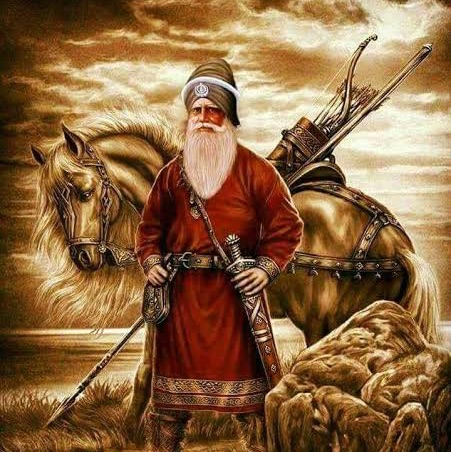
While Baba Buddha Sahib Ji was an embodiment of Seva and Simran, he was also remembered as a great warrior, a master of the sword, and an exceptional horseman.
Traditional accounts describe his horsemanship as so accomplished that few could match him.
He is also remembered as a highly skilled archer, with his ability sometimes compared in traditional narratives to legendary archers such as Arjuna.
During his lifetime, Baba Buddha Sahib Ji taught horsemanship and martial skills to three Guru Sahibs and to many Sikhs.
He is described as such a brave and accomplished master of weapons that he could disarm an opponent with extraordinary speed.
At the request of Guru Ram Das Sahib Ji, Baba Buddha Sahib Ji taught the Fifth Guru, Guru Arjan Sahib Ji, horsemanship and Shastar Vidya.
A traditional account connected with the marriage of Guru Arjan Sahib Ji and Mata Ganga Ji relates that when local people asked Guru Arjan Dev Ji to pull out a stake, some mischievous young men cut a tree and shaped it like a large stake before asking Guru Ji to uproot it.
The all-knowing Satguru Arjan Sahib Ji came riding on horseback, holding a spear, and uprooted the tree from its roots.
The task was said to be so demanding that, after the great strain involved, Guru Sahib Ji’s horse died.
The entire area was astonished by Guru Sahib Ji’s martial skill, and the people sought forgiveness for their mistake.
Later, when the Sixth Guru, Guru Hargobind Sahib Ji, had grown older, Guru Arjan Sahib Ji sent him to Baba Buddha Sahib Ji to learn Shastar Vidya, horsemanship and worldly knowledge.
After Guru Hargobind Sahib Ji received martial training from Baba Ji, tradition remembers him as a warrior whom no enemy could easily face.
When the time came for Guru Hargobind Sahib Ji to wear the two swords of Miri and Piri, Baba Buddha Sahib Ji personally placed both swords upon Guru Sahib Ji.
Later, Guru Hargobind Sahib Ji also arranged for his younger son, Guru Tegh Bahadur Sahib Ji, to receive approximately six years of instruction in martial skills and horsemanship from Baba Buddha Ji.
In the Battle of Kartarpur, Guru Tegh Bahadur Ji Maharaj displayed such bravery that Guru Hargobind Ji gave him the title “Tegh Bahadur.”
Baba Buddha Sahib Ji also trained other sons of the Gurus and many Sikhs in horsemanship and martial skills.
Such was the greatness of Baba Buddha Sahib Ji.
**Words attributed to the Six Guru Sahibs concerning Baba Buddha Sahib Ji**
“You will never be hidden from me.” — First Guru
“What instruction can be given to the one who has Guru Nanak Dev?” — Second Guru
“You are a pillar of Sikhi.” — Third Guru
“It is difficult to find a supreme saint like you in this world.” — Fourth Guru
“You are indeed the protector of the whole world.” — Fifth Guru
“There is none other quite like him.” — Sixth Guru
Let us now learn about the family of the Brahm Giani Baba Buddha Sahib Ji.
Baba Buddha Ji was born in the village of Kathunangal, in the district of Amritsar Sahib, to Bhai Suggha Ji and Mata Gauran Ji.
His childhood name was Bura.
When Guru Nanak Sahib Ji heard the remarkably wise words spoken by the young Bura, Guru Ji is said to have remarked that his wisdom was mature like that of an elderly person.
From this, he became known as Baba Buddha Ji.
Baba Ji married Bibi Miroa Ji, the daughter of a landholder from the village of Achal.
Four sons were born in the household of Baba Buddha Sahib Ji: Bhai Sudhari Ji, Bhai Bhikhari Ji, Bhai Mahimu Ji and Bhai Bhana Ji.
The elder three sons became occupied with their worldly work, while the youngest, Bhai Bhana Ji, continued to serve in the Guru’s House even after Baba Buddha Sahib Ji.
Bhai Bhana Ji performed the Tilak ceremony of Guruship for Guru Har Rai Sahib Ji and thus continued the traditional service of the family.
After Bhai Bhana Ji and his elder son, Bhai Jalal Ji, passed away, this service was taken up with great dedication by his younger son, Bhai Sarwan Ji.
After serving at the feet of Guru Har Rai Sahib Ji for around seven or eight years, Bhai Sarwan Ji passed away in Samvat 1702.
Thereafter, Baba Buddha Ji’s great-grandson, Bhai Jhanda Ji, the son of Bhai Sarwan Ji, came forward to carry on this traditional responsibility.
He worked tirelessly to keep the banner of service flying high.
Tradition records that Baba Buddha Ji personally performed the Anand Karaj of this great-grandson.
At the time of Bhai Jhanda Ji’s birth, Guru Ram Das Ji had visited Baba Buddha Ji at Ramdas.
It is said that Guru Ram Das Sahib Ji wished to name the settlement Jhanda Nagar after Bhai Jhanda Ji, but at Baba Buddha Ji’s request the name was connected with Guru Ram Das Ji and became associated with Ramdas Jhanda.
When Guru Har Krishan Sahib Ji ascended the Guruship, Bhai Jhanda Ji performed the Tilak ceremony.
Bhai Jhanda Ji had also taken part in battles alongside Guru Hargobind Sahib Ji.
Some time after performing the Tilak ceremony for Guru Har Krishan Sahib Ji, Bhai Jhanda Ji also passed away.
Later, in the fifth generation of Baba Buddha Ji’s lineage, Bhai Gurditta Ji took up service in the Guru’s House.
The period of Bhai Gurditta Ji was one of great testing.
At that time, twenty-two claimants had emerged in the town of Bakala, and each wanted Bhai Gurditta Ji to perform the Tilak ceremony for him.
However, Bhai Gurditta Ji remained steadfast and did not go to any of them.
When Guru Tegh Bahadur Sahib Ji was revealed as the true Guru, Bhai Gurditta Ji performed the Guruship Tilak for Guru Tegh Bahadur Sahib Ji.
Bhai Gurditta Ji then decided to remain with Guru Tegh Bahadur Sahib Ji and spent a long time in his company.
When Guru Tegh Bahadur Ji moved onward from Kiratpur, Bhai Gurditta Ji returned to Ramdas.
Later, his heart again longed for Guru Sahib Ji, so he travelled to Anandpur Sahib and rejoined Guru Tegh Bahadur Sahib Ji.
When Aurangzeb had Guru Ji arrested and taken to Delhi, Bhai Gurditta Ji was also with him.
After Bhai Mati Das Ji and Bhai Sati Das Ji were martyred, Bhai Gurditta Ji obeyed Guru Tegh Bahadur Sahib Ji’s command and returned toward Anandpur Sahib.
He reached the banks of the River Yamuna and, while absorbed in meditation, passed away in Bikrami Samvat 1732.
After Baba Buddha Sahib Ji, in the sixth generation there arose a highly respected spiritual figure whose fame spread far and wide and who was honoured by both Hindus and Muslims.
His name was Bhai Ram Koer Ji.
Later, after receiving Amrit from Guru Gobind Singh Ji, his name became Bhai Gurbakhsh Singh Ji.
He was approximately six years younger than Guru Gobind Singh Ji.
Because he belonged to the lineage of Baba Buddha Sahib Ji, tradition records that when he was only around two and three-quarter years old, the Tilak ceremony of Guru Gobind Singh Ji’s Guruship was performed through his hands.
On one occasion, Mata Gujri Kaur Ji requested Guru Gobind Singh Ji to show her a perfect Brahm Giani.
Guru Gobind Singh Ji brought Bhai Ram Koer Ji before Mata Ji and said that at that time there was no greater Brahm Giani than him.
Many other Sakhis are also associated with Bhai Ram Koer Ji.
It is said that the work known as the “300 Sakhi,” containing prophetic sayings, was also written by Bhai Ram Koer Ji.
According to tradition, when Guru Gobind Singh Ji prepared to leave for Nanded Sahib, he sent Bhai Ram Koer Ji back to Ramdas.
Guru Gobind Singh Ji is said to have granted him two blessings.
The first was that whenever he delivered Katha, the Guru would be present upon his tongue and cause the discourse to be spoken.
The second was that whenever he longed for the Guru’s Darshan, he should take up his weapons and go hunting, and he would receive the Guru’s Darshan.
Bhai Santokh Singh Ji was a devotee and disciple of Bhai Ram Koer Ji.
It is said that Bhai Santokh Singh Ji heard the history of the Guru’s House from Bhai Ram Koer Ji and later committed that history to writing.
After the passing of Bhai Ram Koer Ji, his son Bhai Mehar Singh Ji became heir to the property of the Ramdas Dera and managed it until Bikrami Samvat 1820.
Thereafter, his son Bhai Sham Singh Ji became the successor.
After Bhai Sham Singh Ji passed away, his young son Bhai Kahan Singh Ji also died at a young age in the same year.
His son Bhai Sujan Singh Ji was still a child and was not old enough to manage the property and administration.
By that time, internal conflicts among the Sikh Misls had begun, and they took possession of the Dera.
However, they soon realised their mistake.
In order to preserve the legacy of Baba Buddha Sahib Ji, the management of the Dera was entrusted to a Mahant named Charan Das.
After Mahant Charan Das, the Dera and the property associated with Baba Buddha Sahib Ji were managed successively by Mahant Brahm Parkash, Mahant Ram Prasad, Mahant Thakur Das and finally Mahant Raghbir Das.
They are remembered as having managed the Dera in an organised manner.
When the Akali movement arose, Mahant Raghbir Das handed over the entire management of the Gurdwara to the Akalis, that is, to the Shiromani Gurdwara Parbandhak Committee.
Later, Baba Kharak Singh Ji worked tirelessly to develop the Ramdas site associated with Baba Buddha Sahib Ji, including the Sarovar and Langar Hall, for the benefit of the Sangat.
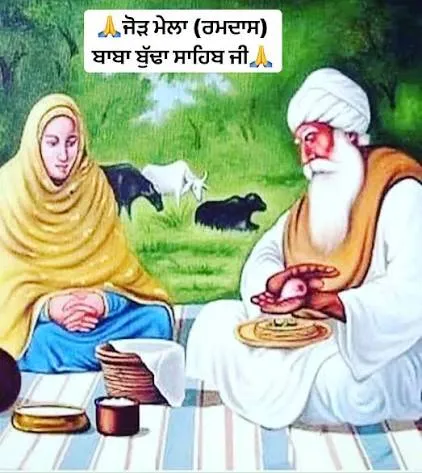
At Bir Baba Buddha Sahib Ji, Baba Buddha Sahib Ji, acting in accordance with the command of Guru Arjan Sahib Ji, blessed Mata Ganga Ji with the boon of a son.
In this tradition, it was Guru Arjan Sahib Ji who had already bestowed the blessing when he instructed Mata Ganga Ji to go to Baba Buddha Sahib Ji, receive his happiness and blessings, and that he would bestow the gift of a son.
The Guru is pleased when he causes the greatness of his Sikhs to be recognised.
Such is the House of Guru Nanak Sahib Ji.
**Please forgive any errors or omissions.
Servant — Jorawar Singh Tarsikka.**
Join the conversation
Sign in to comment or join the discussion.

Loading comments…