

Prakash Gurpurab Sri Guru Ramdas ji
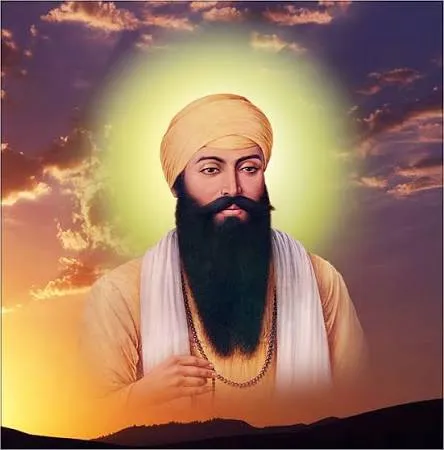
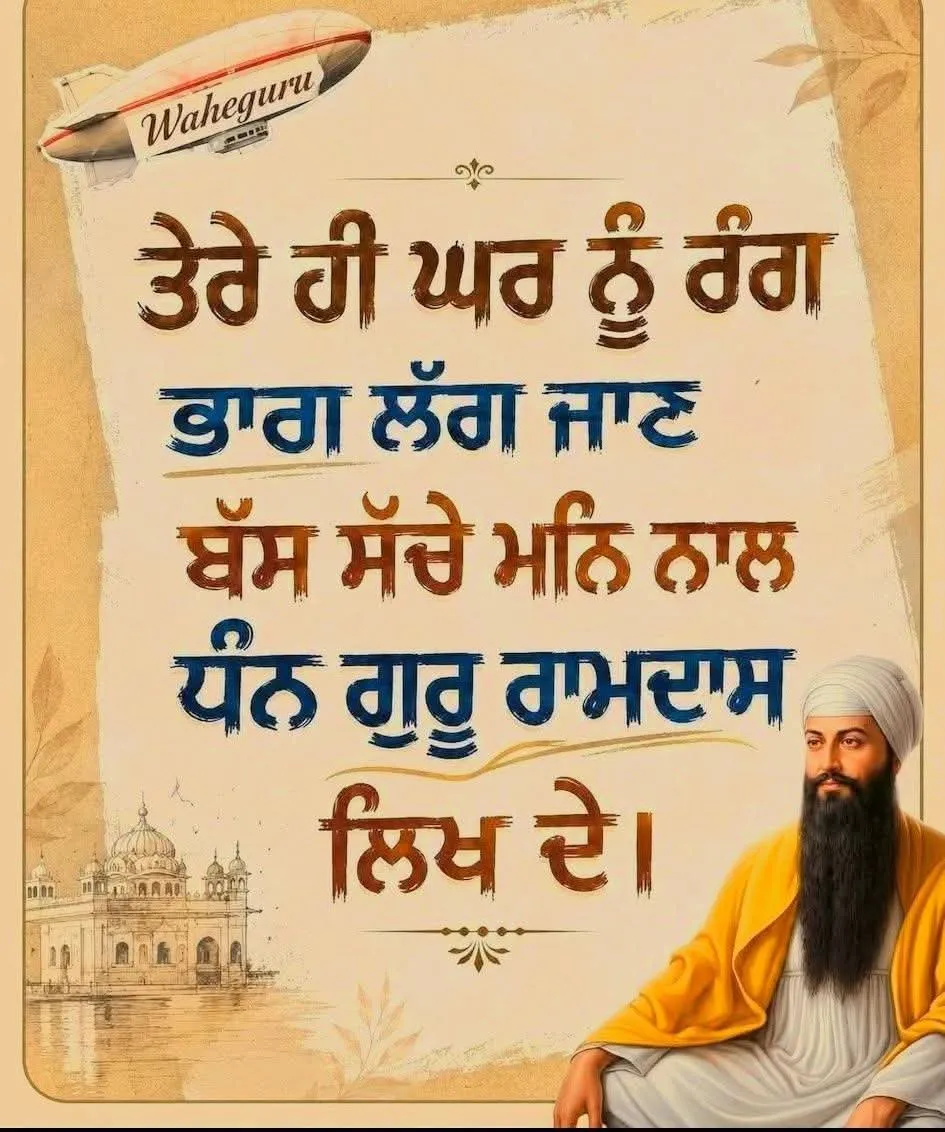
# Heartfelt Greetings on the Prakash Gurpurab of Dhan Dhan Sri Guru Ram Das Sahib Ji
Heartfelt congratulations and countless blessings to the entire Sikh Sangat on the sacred Prakash Gurpurab (Birth Anniversary) of Sri Guru Ram Das Sahib Ji.
On this blessed occasion, let us reflect upon the extraordinary life, teachings, humility, and selfless service of Guru Sahib Ji and make a sincere effort to strengthen our spiritual connection with the Guru.
## Birth and Family History of Sri Guru Ram Das Sahib Ji
In the year 1500, a son was born into the family of Thakur Das Sodhi Ji. He was named Haridas Ji.
When Baba Haridas Ji reached adulthood, he was married. His wife's name was Bibi Anupi Ji, who was also known as Daya Kaur Ji.
Baba Haridas Ji was not merely a servant of God in name; he was truly devoted to the Almighty.
He possessed a gentle, loving, and humble personality. Rather than worshipping various gods and goddesses, he believed in One Supreme God.
He was a contented person who found satisfaction in earning an honest living.
He took great pleasure in serving visitors and guests. Every morning, during Amrit Vela, he would wake up early and immerse himself in devotion to God.
His constant prayer was that he might be blessed with a son who would bring honor to the family and become a beloved devotee of the Almighty.
According to the historical account recorded in *Guru Pranali*, Lahore had developed into a beautiful city along the banks of the River Ravi.
Its streets and markets were filled with merchants, traders, and wealthy businessmen.
Among its residents was Bhai Haridas Ji, a respected member of the Sodhi family.
Twelve years after the marriage of Baba Haridas Ji, the Almighty answered his prayers.
In 1534, Sri Guru Ram Das Ji was born into this devoted family.
His birth was described as a divine moment, as though a radiant spiritual light had spread everywhere and the surroundings were filled with the brightness of moonlight.
The child was named Ram Das Ji. However, because he was the eldest son of the family, everyone affectionately began calling him Jetha Ji.
Principal Satbir Singh Ji, in his book *Puri Hoi Karamaat*, mentions that two years later, another son named Bhai Hardayal Ji was born, followed by a daughter named Ramdasi Ji.
The historical verse states:
**Ramdas Hardayal Sodhi Dui Bhai,
Ik Bibi Ramdasi Saki Bhain Kahai.**
This means that Ram Das Ji and Hardayal Ji were two brothers, while Ramdasi Ji was their sister.
## The Divine Appearance and Childhood of Guru Sahib Ji
Giani Gian Singh Ji, in his historical work *Twarikh Guru Khalsa*, described Sri Guru Ram Das Ji as having a fair complexion, a beautiful appearance, prominent facial features, and a broad forehead.
Historian Max Arthur Macauliffe also described Guru Sahib Ji as exceptionally handsome, graceful, and always smiling.
He particularly mentioned that no one had ever seen Guru Sahib Ji crying.
The sacred compositions of the Bhatt Bards in Sri Guru Granth Sahib Ji describe the child of Thakur Haridas Ji as being raised with extraordinary affection and love, similar to the love Mother Yashoda had for Lord Krishna.
Guru Sahib Ji had beautiful lotus-like eyes and a charming appearance.
When he spoke in his innocent childhood voice, his words sounded exceptionally sweet.
His forehead was broad, and his teeth were beautifully white.
He grew up in an environment filled with good values, contentment, and spiritual understanding.
From an early age, Guru Sahib Ji possessed a deep and thoughtful mind.
He had an extraordinary love for the Almighty, a peaceful nature, remarkable patience, and a strong spiritual character.
The desire to give, share, and help others was present in him from childhood.
Whenever he encountered a saint, spiritual traveler, holy person, or fakir, he would invite them home or request his father to help fulfill their needs.
The historical text *Panth Prakash* describes his childhood with the words:
**"Baal Umar Bridhan Si Chaale."**
This means that even at a young age, his behavior and wisdom resembled those of a mature and experienced person.
Even while playing with other children, he spoke about devotion and encouraged them to remember God.
A traditional verse states:
**Khelan Beech Baalakan Taai,
Updesh Bhagti Jag Saai.**
It describes how he encouraged other children toward devotion to the Lord even during play.
## The Hardships and Struggles of His Early Life
By the time Guru Ram Das Ji was approximately seven years old, according to this account, the members of his immediate family had passed away and returned to the eternal presence of Akal Purakh.
He was left alone in this vast world.
Instead of offering him love and support, some relatives and villagers began looking upon him with contempt.
Some neighbors and relatives even developed such negative feelings toward young Jetha Ji that they would not allow their children to come near him.
Yet today, millions of devotees long to visit the sacred shrine associated with that very Guru Ram Das Sahib Ji.
**The Guru Ram Das Sahib Ji whom people once refused to support has become the spiritual support of countless helpless and suffering souls.**
The Guru Ram Das Ji whom people once refused to feed is now associated with a sacred place where hundreds of thousands of devotees receive food through the tradition of Guru Ka Langar.
The Guru Ram Das Ji whom people once hesitated to offer even a small amount of money is now honored at a shrine where devotees offer generous contributions every day.
The Guru Ram Das Ji whose name some relatives and neighbors discouraged their children from mentioning is now remembered with deep devotion by countless Sikhs seeking spiritual liberation.
Some people, according to the traditional narrative, blamed his birth for the deaths of his parents and siblings.
Yet today, devotees remember Guru Ram Das Ji with faith and believe that prayers offered with his blessings bring spiritual comfort, hope, and strength during illness and suffering.
The Guru Ram Das Sahib Ji whom some relatives and neighbors would not allow into their homes is now honored at a magnificent sacred shrine adorned with gold and beautiful decorations, where people from around the world come to pay their respects.
The young Ram Das Ji whom no relative was willing to provide even a piece of clothing is now remembered at a holy place where countless devotees offer valuable cloths and sacred coverings.
Such is the greatness and blessing of my beloved Dhan Dhan Sri Guru Ram Das Sahib Ji.
## The Birth of Guru Ram Das Ji and the Spiritual Glory of Lahore
When Sri Guru Ram Das Sahib Ji was born, the first three Sikh Gurus were still physically present on Earth.
With the birth of the Fourth Guru, four Guru personalities were present in the world at the same time.
What a blessed and extraordinary period it must have been!
How fortunate was the Earth to witness the divine light of Akal Purakh shining through four Guru forms!
The birth of Sri Guru Ram Das Sahib Ji transformed Lahore, described in this devotional account as a land once associated with suffering, into a place blessed with divine praise.
This reminds us of the sacred town of Maghar.
There was once a widespread belief that anyone who died in Maghar would be reborn as a donkey.
However, when Bhagat Kabir Sahib Ji chose to leave his mortal body in Maghar, the town became associated with great spiritual significance and devotion.
Similarly, at one time, Sri Guru Nanak Sahib Ji, witnessing the suffering and oppression of people in Lahore, uttered the sacred words:
**"Lahor Saharu Jaharu Kaharu Sava Paharu."**
These words speak of a time of great suffering and divine judgment associated with Lahore.
However, when Sri Guru Ram Das Sahib Ji was born in Chuna Mandi, Lahore, Sri Guru Amar Das Sahib Ji proclaimed:
**"Mahalla 3.
Lahor Saharu Amrit Saru Sifati Da Gharu."**
Meaning:
"Lahore has become a pool of nectar and a home of divine praise."
Thus, the land of Lahore became deeply connected with the spiritual legacy and divine blessings of Sri Guru Ram Das Sahib Ji.
## Journey to Basarke and Goindwal Sahib with His Grandmother
After the loss of his family, Guru Ram Das Ji's elderly maternal grandmother took him to the village of Basarke.
Later, she brought him to Goindwal Sahib.
His grandmother would soak wheat overnight so that it could be prepared the following morning.
Young Jetha Ji would then go near the Guru's congregation, where voluntary community service was being performed.
There, he would sell *ghungnian*, a traditional preparation of boiled grains, calling out in his sweet and melodious voice.
He would also serve cool drinking water to the Sangat.
At the same time, he would play a stringed musical instrument and sing Gurbani.
The congregation was naturally attracted to his beautiful appearance, sweet voice, and noble character.
After selling his ghungnian, Jetha Ji would attend the Guru's Darbar.
He performed seva with great love and devotion while continuously remembering the Almighty.
Sometimes, he also performed Kirtan while playing a traditional stringed instrument.
Seeing such dedication, simplicity, love, and humility in a child of such a young age, Guru Sahib Ji was deeply pleased and blessed him.
## Marriage to Bibi Bhani Ji
Sri Guru Amar Das Ji had two daughters.
His elder daughter, Bibi Dani Ji, had already been married to Bhai Rama Ji.
One day, Guru Amar Das Ji was discussing the marriage of his younger daughter, Bibi Bhani Ji, with his wife, Mata Mansa Devi Ji.
During their conversation, Guru Sahib Ji asked:
"What kind of husband would you like for Bibi Bhani?"
At that moment, Bhai Jetha Ji was performing seva nearby.
Mata Ji pointed toward him and replied:
"Someone like him."
Guru Amar Das Ji responded:
"There can be no other exactly like him."
The decision was then made.
Jetha Ji's grandmother was called, and the marriage proposal between Jetha Ji and Bibi Bhani Ji was finalized.
The following year, recognizing Jetha Ji's noble character and exceptional qualities, Guru Amar Das Ji arranged his marriage to Bibi Bhani Ji.
## A Remarkable Example of Humility and Selfless Service
Sri Guru Amar Das Ji was deeply impressed by the character and personality of Bhai Jetha Ji.
His extraordinary dedication to seva, humility, gentle speech, and radiant spiritual presence distinguished him from others.
Even after his marriage, Jetha Ji continued serving Guru Amar Das Ji with complete devotion.
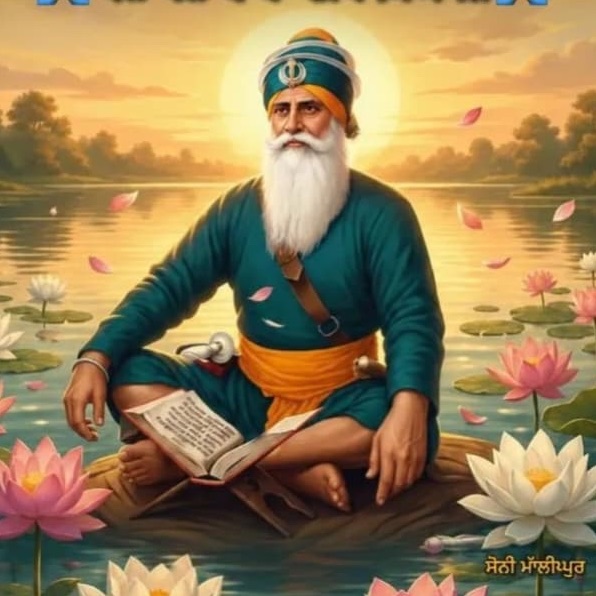
When the construction and service work of the Baoli at Goindwal Sahib was undertaken, Jetha Ji took responsibility for managing the work.
He personally carried baskets of soil on his head.
Throughout the day, he remained engaged in serving the Guru's house, participating in construction work, and helping with the community kitchen.
His humility, sweetness of speech, and beautiful Kirtan performed with a stringed instrument brought immense spiritual joy to the Sangat.
One day, while Jetha Ji was engaged in the construction of the Baoli, he was carrying a basket of earth on his head.
His clothes were covered with mud and soil.
At that time, some of his relatives and neighbors from Lahore arrived with a group of devotees to seek the blessings of Guru Amar Das Ji.
When they saw Jetha Ji working in such a condition, they began criticizing him.
They said:
"You are carrying baskets of soil for your in-laws just to earn your living. You have brought disgrace upon our village."
They also complained to Guru Amar Das Ji:
"Why are you making your son-in-law work like a laborer?"
When Jetha Ji learned about these remarks, he became deeply saddened.
He immediately fell at the feet of Guru Amar Das Ji and humbly requested:
"Maharaj Ji, they are unaware of their mistake. Please forgive them for their words and actions."
This incident beautifully demonstrates the extraordinary humility, patience, forgiveness, and selfless devotion of Sri Guru Ram Das Ji.
Rather than becoming angry with those who insulted him, he prayed for their forgiveness.
Such was the greatness of Guru Sahib Ji's character.
## Becoming the Fourth Sikh Guru
Eventually, Sri Guru Amar Das Maharaj Ji appointed Sri Guru Ram Das Sahib Ji as the successor to the spiritual throne of Sri Guru Nanak Dev Ji.
Thus, Guru Ram Das Sahib Ji became the Fourth Sikh Guru.
His life was a shining example of humility, devotion, selfless service, and complete surrender to the Divine Will.
The greatness of Guru Ram Das Sahib Ji is beyond description.
Even if I were blessed with many lifetimes and continued writing about his spiritual glory, I would still be unable to describe his greatness completely.
Therefore, let us conclude by reflecting upon the timeless teachings of Guru Sahib Ji.
## The Divine Teachings of Sri Guru Ram Das Sahib Ji
Guru Sahib Ji teaches us through Gurbani:
**"Vin Naavai Hor Salaahana Sabh Bolan Feeka Saad."**
Meaning:
"Without the Divine Name, all other praise and speech are spiritually tasteless."
Sri Guru Ram Das Sahib Ji emphasized the fundamental principles established by Sri Guru Nanak Dev Ji:
**Naam Japna** — Remembering and meditating upon the Divine Name.
**Kirat Karni** — Earning an honest living through hard work and integrity.
**Vand Chhakna** — Sharing one's earnings and resources with others.
Along with these principles, Guru Sahib Ji emphasized the importance of selfless service in fulfilling family responsibilities and contributing to the welfare and progress of society.
To follow the path of Gurmat, one must strive to overcome lust, anger, greed, attachment, ego, deceit, falsehood, slander, doubt, and jealousy.
Pride in material wealth is meaningless because worldly possessions are temporary.
Maya, or worldly attachment, is like a shadow.
Sometimes it appears on one side, and sometimes it shifts to the other.
Like a potter's wheel, it continues turning and changing.
Therefore, human beings should not become arrogant because of wealth, status, or worldly achievements.
Instead, they should live with humility, honesty, compassion, devotion, and a spirit of service.
A person who sincerely follows the principles of Gurmat and applies the Guru's teachings in daily life is truly worthy of being called a Gursikh.
## A Prayer on the Sacred Prakash Gurpurab
On this blessed occasion of the Prakash Gurpurab of Sri Guru Ram Das Sahib Ji, let us seek Guru Sahib Ji's blessings.
May we develop humility in our hearts, love in our actions, truthfulness in our words, and compassion toward all living beings.
May we always remember the Almighty, serve humanity without discrimination, and remain dedicated to the welfare of all.
May the teachings of Sri Guru Ram Das Sahib Ji continue to guide us toward spiritual enlightenment, peace, and righteousness.
**Dhan Dhan Sri Guru Ram Das Sahib Ji.**
If there are any mistakes or shortcomings in this article, I humbly request forgiveness from Guru Sahib Ji and the entire Sangat.
**Waheguru Ji Ka Khalsa, Waheguru Ji Ki Fateh.**
**Author: Zorawar Singh Tarsikka**
Join the conversation
Sign in to comment or join the discussion.
Loading comments…