

Gurgaddi Gurpurab Sri Guru Granth Sahib ji
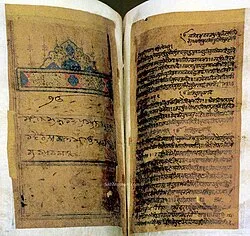
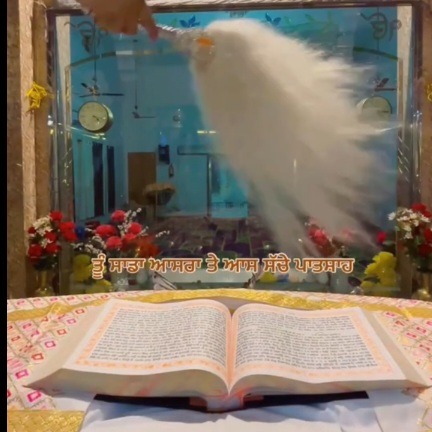
Guruship Day of Sri Guru Granth Sahib Ji
Heartfelt congratulations to the entire Sikh Sangat on the Guruship Day of Sri Guru Granth Sahib Ji.
By the command of the Timeless One, the Panth was established.
All Sikhs are commanded to accept the Granth as their Guru.
Recognize Guru Granth Sahib Ji as the living presence of the Gurus.
Whoever wishes to meet God should seek Him through the Divine Word.
Please make it a habit to read these historical writings carefully. Do not simply like and share them without reading, because there is much we can learn from them in our lives.
Before writing today's history, I want to make one thing clear. For those who believe there is even the slightest difference between the earlier Sikh Gurus and Sri Guru Granth Sahib Ji, Sri Guru Gobind Singh Ji Maharaj provided a powerful example.
The Sri Guru Granth Sahib Ji that you see and bow before every day at Gurdwaras was transcribed under the direction of Sri Guru Gobind Singh Ji Maharaj through his spiritual power.
The reason was that the original Bir prepared during the time of Sri Guru Arjan Dev Ji was in the possession of Dhir Mal's family at Kartarpur.
They clearly refused to hand over that Bir to Sri Guru Gobind Singh Ji. They also told the Singhs that if Gobind Singh was truly the successor to the divine light of Guru Nanak Sahib Ji, why could he not prepare the sacred scripture himself instead of asking them for it?
Therefore, Sri Guru Gobind Singh Ji had Sri Guru Granth Sahib Ji completed at Talwandi Sabo.
He also instructed the Singhs that all ten Sikh Gurus possessed the same divine light and that no difference, deficiency, or superiority should be considered among them.
At Damdama Sahib, Sri Guru Gobind Singh Ji had Bhai Mani Singh Ji include 59 Shabads and 57 Saloks of the ninth Guru, Sri Guru Tegh Bahadur Ji.
This marked the completion of the sacred scripture, which subsequently became known as the Damdami Bir.
In 1708, at Nanded, when the time approached for Guru Gobind Singh Ji to depart for Sachkhand, he permanently ended the tradition of a human Guru and bestowed the eleventh position of Guruship upon Sri Guru Granth Sahib Ji.
According to the command of Guru Sahib, Sri Guru Granth Sahib Ji is the eternal Satguru of every Sikh.
Through its teachings, every human being can fulfill their mental, spiritual, and inner needs.
The entire Gurbani teaches humanity to live in unity. It shows people how to live with Chardi Kala (ever-rising optimism), self-confidence, universal brotherhood, equality, and concern for the welfare of all.
It repeatedly encourages humanity to regard every person as equal and rise above discrimination, division, and prejudice.
When Guru Sahib realized that his departure was approaching, he asked for five coins and a coconut.
A final religious congregation was arranged, and Sri Guru Granth Sahib Ji was ceremoniously installed.
Guru Sahib placed the five coins and coconut before Sri Guru Granth Sahib Ji and bowed respectfully.
Following the traditional ceremony of succession, he formally bestowed Guruship upon Sri Guru Granth Sahib Ji.
He connected the Sikh community permanently with the Shabad Guru, the Divine Word. This was one of his greatest blessings to the Sikh Panth.
Afterward, Guru Sahib departed from his physical existence and merged with the Eternal Light.
On that occasion, he uttered the words that continue to resonate in every Gurdwara and Sikh household:
By the command of the Timeless One, the Panth was established.
All Sikhs are commanded to accept the Granth as their Guru.
Recognize Guru Granth Sahib Ji as the living presence of the Gurus.
Whoever wishes to meet God should seek Him through the Divine Word.
Expressing gratitude to Guru Nanak Sahib Ji for the spiritual blessings received through him, Guru Sahib recited the following Persian verse:
Deg Tegh Fateh Bedarang, Yaft Az Nanak Guru Gobind Singh.
The verse expresses that the blessings of charity, righteous strength, and victory were received through Guru Nanak.
Guru Sahib connected Sikhism with the Shabad Guru and explained that anyone who desires the Guru's Darshan should seek the presence of Sri Guru Granth Sahib Ji.
Anyone wishing to communicate with the Guru should read, understand, listen to, and reflect upon the teachings of Sri Guru Granth Sahib Ji.
Whoever desires to behold the Guru should seek the Darshan of Sri Guru Granth Sahib Ji.
Whoever wishes to converse with me should read, listen to, and contemplate Sri Guru Granth Sahib Ji.
Guru Sahib instructed the Sikh community that from that day forward, Sri Guru Granth Sahib Ji alone would be their Guru.
Information about Sri Guru Granth Sahib Ji
Description Number
Total Angs (pages) 1430
Total Shabads 2026
Total Raags 31
Ashtpadis 305
Vaars 22
Pauris 471
Saloks 664
Gurus whose Bani is included 6
Sikhs whose Bani is included 3–4
Bhagats whose Bani is included 15
Bhatts whose Bani is included 11
First Raag: Sri Raag
Last Raag: Jaijavanti
Arrangement of Raags and Angs in Sri Guru Granth Sahib Ji
Raag or composition Angs
Sri Raag 14–93
Majh Raag 94–150
Gauri Raag 151–346
Asa Raag 347–488
Gujri Raag 489–526
Devgandhari Raag 527–536
Bihagara Raag 537–556
Wadahans Raag 557–594
Sorath Raag 595–659
Dhanasari Raag 660–695
Jaitsri Raag 696–710
Todi Raag 711–718
Bairari Raag 719–720
Tilang Raag 721–727
Suhi Raag 728–794
Bilawal Raag 795–858
Gond Raag 854–875
Ramkali Raag 876–974
Nat Narayan Raag 975–983
Mali Gaura Raag 984–988
Maru Raag 989–1106
Tukhari Raag 1107–1117
Kedar Raag 1118–1124
Bhairav Raag 1125–1167
Basant Raag 1158–1196
Sarang Raag 1197–1253
Malhar Raag 1254–1293
Kanra Raag 1294–1318
Kalyan Raag 1319–1326
Prabhati Raag 1327–1351
Jaijavanti Raag 1352–1353
Salok Sahaskriti 1353–1360
Gatha, Funhe and Chaubole 1360–1364
Saloks of Kabir 1364–1377
Saloks of Farid 1377–1384
Savaiye 1385–1409
Additional Saloks beyond the Vaars 1410–1429
Mundavani and Ragmala 1429–1430
Bani of Sri Guru Nanak Dev Ji
Among the major compositions of Sri Guru Nanak Dev Ji are Japji Sahib, Majh Ki Vaar, Patti, Asa Ki Vaar, Sidh Gosht, Barah Maha, and Majhar Ki Vaar.
The source describes Asa Ki Vaar as containing 32 Ashtpadis, 5 Chhands, 24 Pauris, 45 Saloks, and 30 Padas.
In Gujri Raag, there are 2 Padas and 9 Ashtpadis.
In Sorath Raag, there are 12 Padas, 4 Ashtpadis, and 2 Saloks.
In Dhanasari Raag, there are 9 Padas, 2 Ashtpadis, and 3 Chhands.
In Ramkali Raag, there are 11 Padas, 9 Ashtpadis, and 19 Saloks.
Japji Sahib is regarded as the finest and most distinguished composition of Sri Guru Nanak Dev Ji.
It consists of 38 Pauris and 2 Saloks.
Through works such as Japji Sahib and Sidh Gosht, Guru Nanak Dev Ji demonstrated that the language of ordinary people could also be used to create highly structured and sophisticated poetry.
Bani of Sri Guru Angad Dev Ji
Sri Guru Angad Dev Ji composed 63 Saloks.
These Saloks are not placed under any particular Raag. Instead, they are recorded alongside the Vaars of other Sikh Gurus.
Bani of Sri Guru Amar Das Ji
The third Sikh Guru, Sri Guru Amar Das Ji, strongly awakened those who failed to understand the Divine Word.
Guru Sahib declared:
Those who do not understand the Shabad are spiritually blind and deaf. What purpose has their coming into this world served?
Guru Sahib also inspired the Sikhs with the words:
Come, beloved Sikhs of the True Guru, and sing the True Bani.
Sri Guru Amar Das Ji composed Bani in 18 Raags.
His compositions include 171 Chaupadas, 91 Ashtpadis, 85 Pauris, and 305 Saloks in different Raags.
His Bani appears in several poetic forms, including Tipadas, Chaupadas, Panchpadas, Ashtpadis, Sohilas, Bahupadas, Saloks, Pauris, Vaars, Chhands, Kafis, Patti, Alahunis, Vaar Sat (Satvara), and Anand.
Four Vaars were composed by Guru Sahib in Gujri, Suhi, Ramkali, and Maru Raags.
Among the Saloks of Kabir Ji and Farid Ji, one and three Saloks respectively are recorded as explanatory comments.
A total of 67 Saloks of Guru Amar Das Ji are included in the section known as Additional Saloks beyond the Vaars.
The entire Bani of Guru Amar Das Ji is also described in the source as being composed in 17 Raags.
Bani of Sri Guru Ram Das Ji
The fourth Sikh Guru, Sri Guru Ram Das Ji, gave the Divine Word the status of the living Guru.
Bani is the Guru, and the Guru is Bani. Within Bani is contained the essence of divine nectar.
Sri Guru Ram Das Ji composed Bani in 30 Raags.
According to the text, Guru Sahib composed 678 Shabads.
His compositions include a total of 264 Shabads, 58 Ashtpadis, 38 Chhands, 183 Pauris, 105 Saloks recorded with Vaars, and eight Vaars.
Apart from these, Guru Sahib also composed Chhands, Karhalas, Ghorian, and Pehre in traditional folk-poetry forms.
The Chhands and Karhalas were composed in two Raags.
Bani of Sri Guru Arjan Dev Ji
A total of 2,218 Shabads of Sri Guru Arjan Dev Ji are described as having been collected.
Guru Sahib composed Bani in 30 Raags.
According to the original article, the compositions recorded in Sri Guru Granth Sahib Ji include:
1,322 Shabads and Ashtpadis; 45 Chhands; 6 Vaars; 117 Pauris; Saloks within the Vaars; 252 Shabads in the Bhagat Bani; 3 Saloks in Sahaskriti; 67 in Gatha Mahalla Fifth; 24 in Funhe Mahalla Fifth; 23 additional Saloks beyond the Vaars; 22 in Mundavani; and 2 concluding Saloks.
In addition to the 30 Raags, instructions concerning the musical tunes used to sing these Vaars were recorded at their beginnings.
This indicates their association with traditional folk ballads and spiritual Vaars.
The influence of several dialects and languages is clearly visible in these compositions.
Guru Sahib also composed several independent works, including Barah Maha, Bavan Akhri, Sukhmani, Thiti, Pehre, Din-Rain, Birhare, Gunvanti, Rutti, and Anjalian.
These are recognized for their distinctive qualities as independent poetic compositions.
The themes covered by Guru Sahib's entire Bani are extremely broad.
They include profound spiritual and religious reflections on God, the individual soul, creation, liberation, religious devotion, and the circumstances of the age.
These compositions also reject empty rituals and outward displays of religiousness.
The entire Bani reflects the depth of Guru Sahib's thinking and establishes him before us as a great spiritual writer and poet.
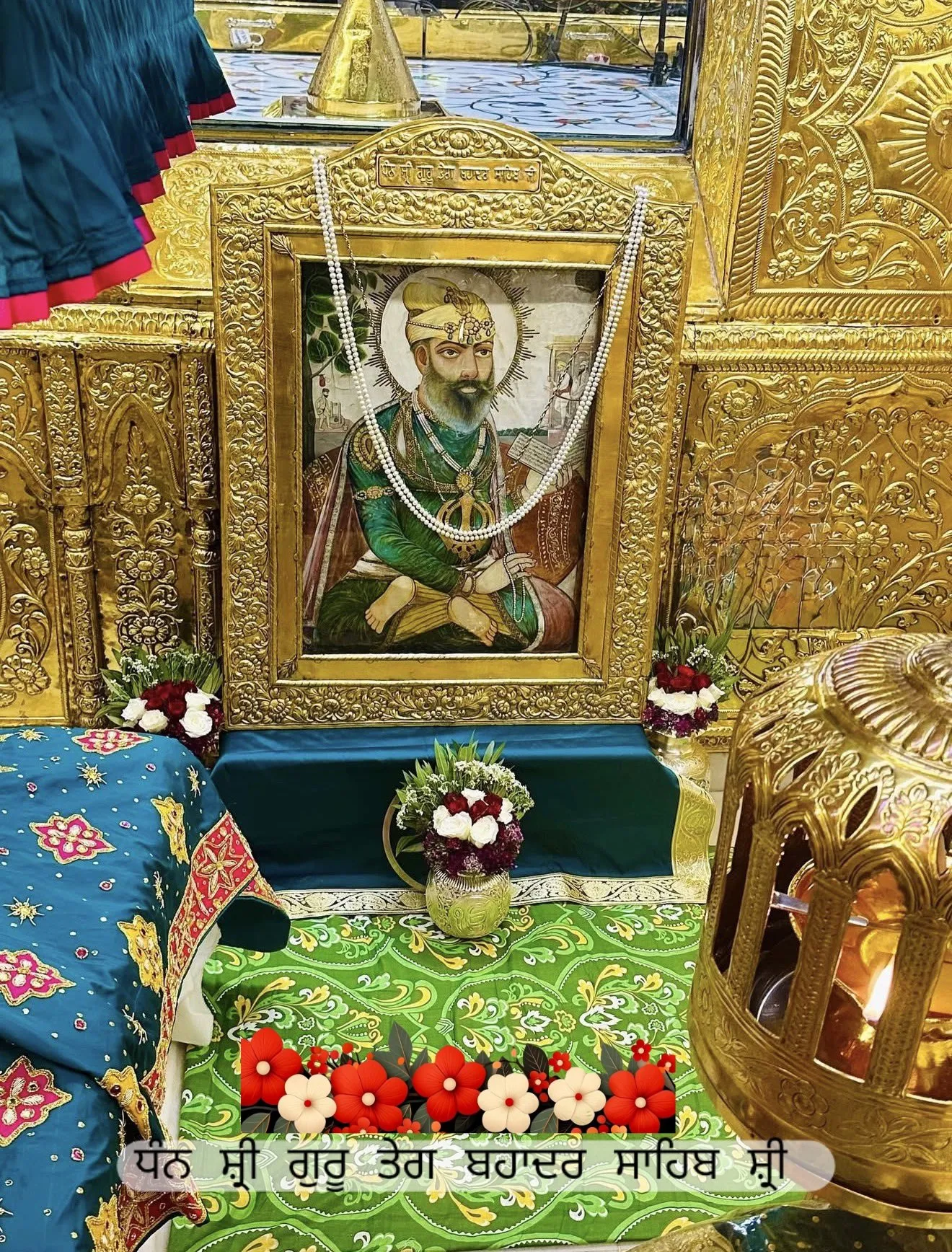
Bani of Sri Guru Tegh Bahadur Ji
Sri Guru Tegh Bahadur Ji composed 59 Shabads and 57 Saloks in 15 Raags.
According to the source, Sri Guru Gobind Singh Ji had these compositions written by Bhai Mani Singh Ji in 1706.
Bani of the Bhagats
Name Number given in the original
Bhagat Kabir Ji 224 Saloks
Bhagat Namdev Ji 61
Bhagat Ravidas Ji 40
Bhagat Trilochan Ji 4
Bhagat Farid Ji 4+132
Bhagat Beni Ji 3
Bhagat Dhanna Ji 3
Bhagat Jaidev Ji 2
Bhagat Bhikhan Ji 2
Bhagat Surdas Ji 1
Bhagat Parmanand Ji 1
Bhagat Sain Ji 1
Bhagat Pipa Ji 1
Bhagat Ramanand Ji 1
Bhagat Sadhna Ji 1
Guru Arjan Dev Ji 3
Bani of the Eleven Bhatts
The Bani of eleven Bhatts is also included:
Kalsahar Ji, Jalap Ji, Kirat Ji, Bhikhimal Ji, Sall Ji, Bhall Ji, Nall Ji, Ball Ji, Gayand Ji, Harbans Ji, and Mathura Ji.
Bani of Four Sikhs
The compositions of four Sikhs are also mentioned:
Baba Sundar Ji, Satta Ji, Balwand Ji, and Bhai Mardana Ji.
Among all the Sikh Gurus, Sri Guru Arjan Dev Ji contributed the largest amount of Bani.
Out of 5,894 Saloks, the article states that 2,216 belong to Guru Arjan Dev Ji.
During the time of Guru Arjan Sahib Ji, the number of Saloks was 5,762. Later, the Bani of Sri Guru Tegh Bahadur Sahib Ji was also included.
The language of Gurbani was kept simple and accessible so that everyone could read it and reflect upon its teachings.
This was considered the most effective way to guide people away from lives dominated by worldly pleasures and despair, bring them onto the righteous path, and connect the Sangat with the Divine Word.
Through poetic forms such as Ghorian, Alahunian, Karhala, Vanjara, Thitivar, Barah Maha, Suchajji, Kuchajji, Gunvanti, Lavan, Chaubole, and Funhe, Gurbani was made an inseparable part of everyday human life.
The numerical counts of the Shabads were also recorded carefully to prevent anyone from making unauthorized additions or alterations.
Sri Guru Granth Sahib Ji and Our Responsibility in Life
Sri Guru Granth Sahib Ji embodies the same divine light as Sri Guru Nanak Sahib Ji.
Guru Granth Sahib Ji will always continue to guide us toward the path of truth.
If there is any deficiency, it lies within us.
We have become lacking in faith and devotion. Our thinking has increasingly become dominated by arguments and questioning everything.
I often share three examples to explain this.
First example — The importance of childhood habits
Young children are like the tender branches of a mulberry tree.
They can be bent in whichever direction we choose, and they will follow that direction.
The habits we teach children during their early years become part of their character.
Those habits often remain with them throughout their lives, until their final breath.
It is the choice of parents whether they want to connect their children with Gurbani or encourage them toward activities such as Bhangra.
Second example — Faith cannot be forced upon anyone
Suppose we have a domestic animal at home, whether it is a cow or a buffalo.
We can untie the animal and bring it near a water trough.
We can stand beside it and encourage it to drink water.
But we cannot force water into its mouth.
In the same way, our writers and religious preachers can explain to you the importance of Sri Guru Granth Sahib Ji.
They can teach you that Gurbani has the spiritual power to carry you across the ocean of worldly existence and bring you to the feet of the Guru.
They can encourage you to connect with Gurbani and make a habit of reading it every day.
However, they cannot force you to read Gurbani against your will.
The decision must come from within you.
Third example — Knowing the right path and following it
Suppose someone asks us:
"I want to go to Sri Darbar Sahib. Can you please tell me the way?"
We can explain the correct route.
We might say that after getting off at the bus stand, the person should follow a particular road and continue in a certain direction.
But imagine that after going some distance, the person abandons the road leading to Sri Darbar Sahib and instead goes toward a cinema or follows another wrong route.
Would that be our fault?
We had explained the correct road.
If the person changes their mind after moving ahead, what can we do about it?
In exactly the same way, Sri Guru Granth Sahib Ji shows us the correct path in life.
Guru Sahib teaches that if you follow this path, you can become a reflection of Waheguru.
But if you abandon the Guru's teachings and choose the path of intoxicants, deception, dishonesty, or other wrongdoing, the fault does not lie with the Guru.
The responsibility is entirely your own.
Please forgive any mistakes or omissions.
Author: Zorawar Singh Tarsikka.
Join the conversation
Sign in to comment or join the discussion.




Loading comments…