

Shaheedi Diwas Baba Deep Singh ji
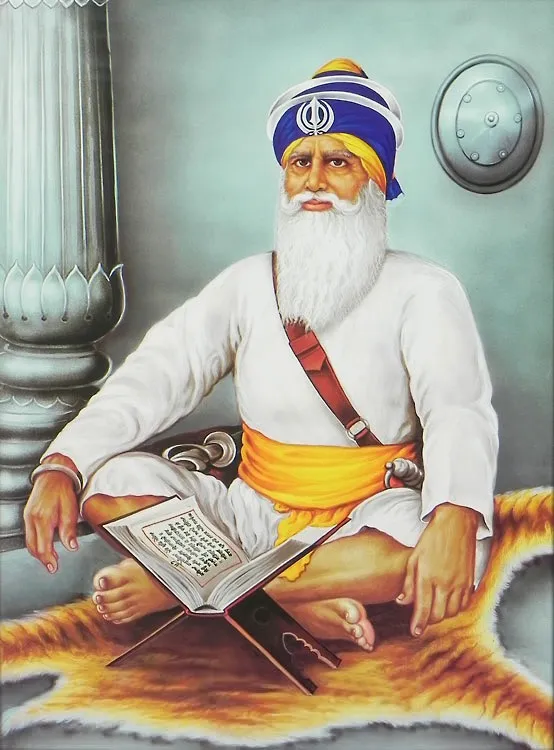
Martyrdom of Baba Deep Singh Ji – A Brief Look at His Life and History
Baba Deep Singh Ji, the great commander and courageous warrior of the Sikh nation, was born on January 26 to Mata Jiuni Ji and Bhai Bhagtu Ji in the village of Pahuwind. His parents named the child Deepa.
When he turned 18, the festival of Hola Mohalla was approaching. His parents were devoted servants of the Guru's house. The Sikh congregations of the Majha region decided to celebrate Hola Mohalla at Sri Anandpur Sahib that year. Deepa Ji also prepared to accompany his parents to seek the blessings and Darshan of Guru Sahib.
After travelling on foot for several days, the group reached Sri Anandpur Sahib. The congregations were overjoyed and spiritually blessed by the Darshan of Dhan Sri Guru Gobind Singh Ji. Inspired by Guru Sahib, everyone received the sacred gift of Amrit from Kalgidhar Patshah Ji.
After receiving Amrit, Deepa Ji was given the name Deep Singh.
After serving for several months, when the congregations began preparing to return home, Guru Sahib asked Bhai Deep Singh Ji to remain with him.
While staying at Anandpur Sahib, Bhai Deep Singh Ji became proficient in Gurmukhi, Persian, and Arabic scripts. He also mastered martial arts, horse riding, sword fighting, archery, and spear fighting.
Whenever Kalgidhar Patshah went hunting, Bhai Deep Singh Ji accompanied him.
During his stay, he studied sacred religious scriptures and Gurbani deeply under the guidance of Bhai Mani Singh Ji.
He was physically strong and well-built, possessed firm determination, and was deeply devoted to spiritual practices. He was a man of religious character who remained constantly absorbed in meditation, prayer, and devotion to God.
When Dhan Sri Guru Gobind Singh Ji left the fort of Anandpur Sahib, he entrusted Bhai Mani Singh Ji, Bhai Dhanna Singh Ji, and Bhai Jawahar Singh Ji with the responsibility of caring for Mata Sundari Ji and Mata Sahib Kaur Ji.
He sent them to Delhi along with two female attendants, Bibi Bhag Kaur Ji and Bibi Hardas Kaur Ji.
At that time, Bhai Deep Singh Ji stayed for some time at the home of Bhai Jawahar Singh Ji. After receiving the blessings and permission of Mata Ji, he returned to his native village of Pahuwind and dedicated himself to spreading the teachings of Sikhism.
After the Battle of Khidrana, when Guru Sahib reached Damdama Sahib, he instructed Baba Deep Singh Ji and Jathedar Budha Singh Ji to remain there and perform seva.
When Sri Guru Gobind Singh Ji resumed the work of preparing the Adi Bir, Baba Deep Singh Ji served as a scribe under the instructions of the Tenth Guru.
When Guru Sahib departed for the south, he entrusted Baba Deep Singh Ji and Baba Budha Singh Ji with the responsibility of maintaining and serving the sacred place known as Guru Ki Kashi, Damdama Sahib.
They were also assigned the duties of teaching, studying, and arranging the transcription of Gurbani.
Baba Deep Singh Ji carried out these responsibilities with immense devotion, love, and sincerity.
During his service at Damdama Sahib, Baba Deep Singh Ji had a well constructed within the premises of Takht Sahib. This well, located along the circumambulation pathway, became known as the Well of the Martyrs.
Jathedar Budha Singh Ji planted jujube trees at the site.
Being deeply devoted to Gurbani and having a profound love for its spiritual teachings, Baba Deep Singh Ji performed this service with exceptional dedication. He also continued educating the local congregations about Sikh principles and traditions.
During this period, Baba Ji personally prepared four handwritten copies of Sri Guru Granth Sahib Ji.
He was regarded as one of the greatest Sikh scholars of his time.
It is said that after the martyrdom of Bhai Mani Singh Ji, Baba Deep Singh Ji carried Sikh scholarship and religious learning to new heights.
In 1708, at Nanded, when Sri Guru Gobind Singh Ji bestowed the title of Banda Bahadur upon Madho Das and sent him to Punjab, Baba Deep Singh Ji also entered the battlefield to further strengthen the honour and glory of Sikhism.
He supported Baba Banda Bahadur in every battle against Mughal rule.
Baba Deep Singh Ji always fought at the forefront of the battlefield. His bravery and military strength created such fear among his enemies that opposing forces would reportedly scatter merely upon hearing his name.
His group became widely known as the Shaheedi Jatha, or Martyrs' Band.
Ultimately, Sirhind was conquered, and the flag of victory was raised over the fort of Sirhind.
Baba Deep Singh Ji personally undertook the sacred service of writing four copies of Sri Guru Granth Sahib Ji. These four handwritten volumes were later sent to the four Takhts to be respectfully installed for Parkash.
Historical accounts mention that before beginning the transcription of Sri Guru Granth Sahib Ji, Baba Ji prepared so many writing pens that an entire room was filled with them.
Whenever the tip of a pen became worn and thick during writing, he would place that pen into the sacred Sarovar and take a new one.
One Sikh sitting nearby asked him:
"Baba Ji, this pen is still perfectly good. Why do you throw it away? If you trim its tip slightly with a knife, you could use it to write much more."
Baba Ji replied:
"Singho, you do not understand my feelings. How can I take a knife and scrape the tip of a pen that has been used to write Maharaj's sacred Gurbani? Instead of honouring that pen, should I disrespect it? I cannot do such a thing."
Such was the greatness and purity of Baba Ji's thinking.
During the 18th century, the entire Khalsa Panth emerged from the forests and mountains and gathered in an organized form.
The various Sikh groups and organizations were brought together and divided into twelve Misls, each led by a principal Jathedar.
One of these was known as the Shaheed Misl, and Baba Deep Singh Ji was its chief Jathedar.
During that century, India suffered widespread plundering at the hands of foreign invaders and raiders such as Nadir Shah and Ahmad Shah.
These attackers looted wealth and possessions and captured young boys and girls, taking them away as slaves to be sold for very small amounts in the markets of Ghazni.
The honour and dignity of women and daughters were openly violated.
By this time, the Sikh Misls had been established. They united to resist these Afghan raiders.
The Sikh warriors attacked the raiders, recovered valuable stolen property, and rescued women and girls from captivity.
They then respectfully escorted these rescued women back to their homes and families.
Baba Deep Singh Ji was among these brave warriors.
Ahmad Shah Durrani was a bitter enemy of the Sikhs and was determined to eliminate them.
During his invasion of India in 1757, he stopped for some time in Lahore while travelling toward Delhi.
He plundered the city of Amritsar and destroyed its buildings.
During this attack, Jamal Khan, who was in charge of Amritsar, committed sacrilege against Sri Darbar Sahib Ji and ordered the sacred Sarovar to be filled with earth.
When news of this desecration reached Baba Deep Singh Ji at Damdama Sahib in Talwandi Sabo, it deeply wounded his heart.
At that time, Baba Ji was engaged in the sacred service of transcribing Sri Guru Granth Sahib Ji.
He immediately handed over this responsibility to another Singh and prepared to leave for Sri Amritsar Sahib.
Baba Ji firmly resolved to confront those responsible for violating the sanctity of Sri Darbar Sahib Ji.
Messages were sent to surrounding towns and settlements.
Countless Singhs from different places gathered under Baba Ji's leadership to defend the sacred religious shrine.
Thus, the Dal Khalsa grew into a large force.
After crossing the Beas River, the Sikh group entered the Majha region.
Upon reaching the sacred shrine of Sri Tarn Taran Sahib, the entire group of Singhs offered Ardas.
After leaving the town, Baba Deep Singh Ji drew a line on the ground and declared:
"Whoever is ready to embrace martyrdom should cross this line. Anyone who does not wish to become a martyr may return home."
All the Singhs raised loud Jaikaras and crossed the line, advancing toward Amritsar.
Meanwhile, the governor of Lahore had established a military blockade under the leadership of Jahan Khan near Gohalwar, approximately ten miles from Tarn Taran.
The two forces confronted each other, and a fierce battle began.
Jahan Khan was killed, causing panic and disorder among the royal troops.
Meanwhile, Haji Hatai Khan also arrived with his forces.
Another extremely fierce battle followed.
The Sikhs began suffering casualties, and the Singhs started attaining martyrdom one after another.
As the battle continued, the Sikh warriors gradually pushed the Afghan forces backward until they reached the outskirts of Amritsar, near Chatiwind Gate and Gurdwara Ramsar Sahib.
Baba Deep Singh Ji advanced through the battlefield, wielding a massive double-edged Khanda weighing eight kachcha seers, striking down enemies as he moved forward.
Fighting continuously, the Singhs drew closer to Amritsar.
During hand-to-hand combat with Jamal Khan, Baba Deep Singh Ji's head was severed.
As Baba Ji was about to fall, a Singh lovingly reminded him:
"Baba Ji, you had offered Ardas that you would attain martyrdom after reaching Sri Darbar Sahib. But you are bidding your final farewell here, before reaching the sacred shrine."
According to the traditional account, Baba Ji then remembered his Ardas before the Guru.
Meditating upon Sri Guru Ram Das Sahib Ji, he rose again to fulfil his solemn promise.
Holding his severed head with his left hand and wielding his Khanda with his right, Baba Ji continued fighting and striking down his enemies.
He finally reached the sacred Parikrama of Sri Harmandir Sahib Ji.
There, he offered his head at the holy feet of Guru Sahib and attained martyrdom.
Similarly, Jathedar Ram Singh Ji also attained martyrdom after defeating many enemies. His memorial, Shaheed Ganj, is situated in Katra Ramgarhia.
Baba Sajjan Singh Ji, Baba Bahadur Singh Ji, and several other Singhs fought bravely and attained martyrdom in Guru Ka Bagh.
Their memorial site was established in that garden.
Today, the site of the former garden is occupied by Diwan Hall Manji Sahib.
In memory of these martyrs, a Nishan Sahib stands near Manji Sahib.
The names of the following Singhs are inscribed on its raised platform:
1. Baba Deep Singh Ji Shaheed – Chief Jathedar
2. Baba Balwant Singh Ji Shaheed – Jathedar
3. Baba Hira Singh Ji Shaheed – Jathedar
4. Baba Ganda Singh Ji Shaheed – Jathedar
5. Baba Lehna Singh Ji Shaheed – Jathedar
6. Baba Ran Singh Ji Shaheed – Jathedar
7. Baba Gopal Singh Ji Shaheed – Jathedar
8. Baba Bhag Singh Ji Shaheed – Jathedar
9. Baba Sajjan Singh Ji Shaheed – Jathedar
10. Baba Bahadur Singh Ji Shaheed – Jathedar
Join the conversation
Sign in to comment or join the discussion.

Loading comments…