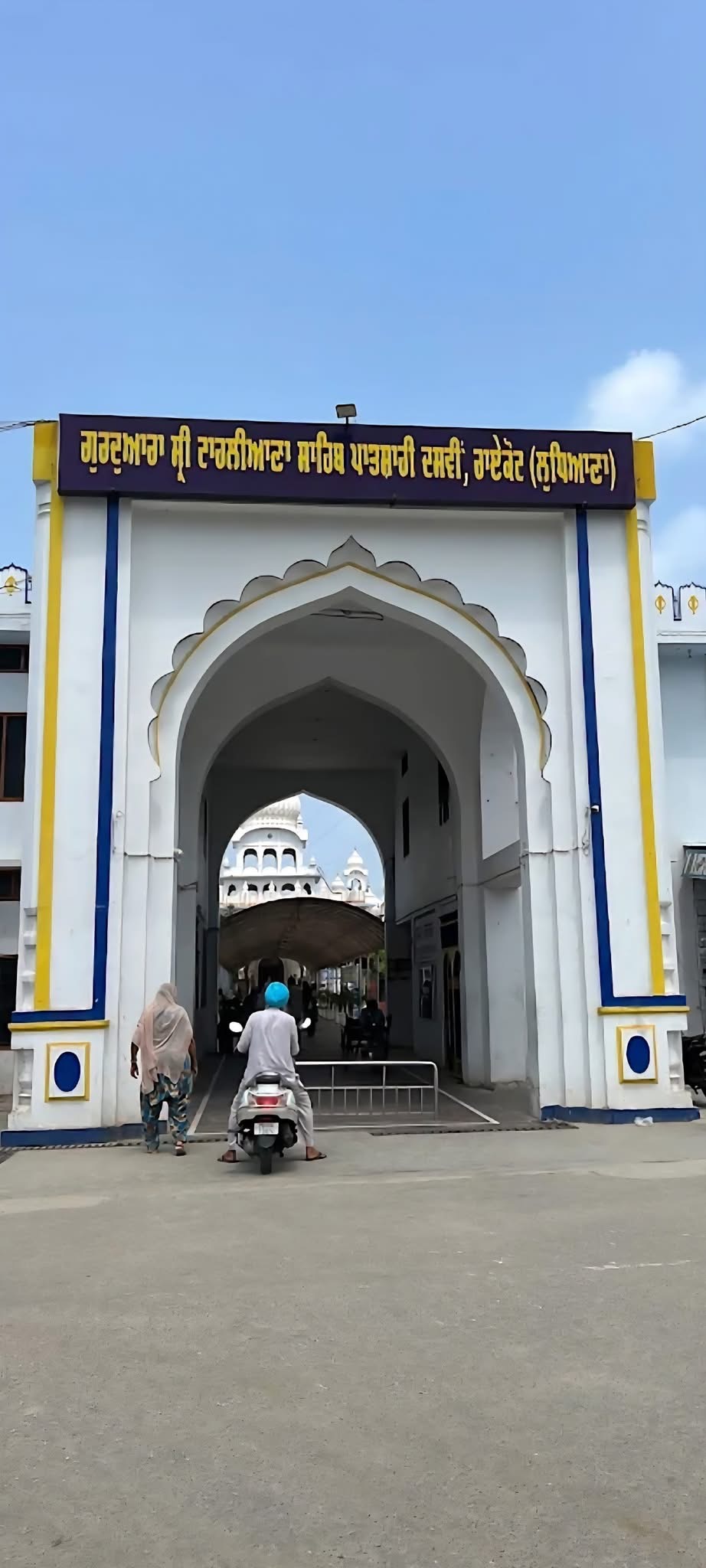
The Jaito Morcha holds a very significant place in Sikh history. If it is said that the Jaito Morcha laid the foundation for India’s freedom, it would not be an exaggeration. In Jaito, located in Faridkot district, the annual Jor Mela is being held at Gurdwara Shaheed Ganj Tibbi Sahib. To learn about this fair and the history of the Jaito Morcha, our team reached Gurdwara Shaheed Ganj Tibbi Sahib. Let us understand what the Jaito Morcha was, why it was launched, and by whom. History While speaking to an ETV Bharat journalist, Sikh leader Bibi Rajinder Kaur stated that the Jaito Morcha was launched by the Sikh sangat against the excesses of the British government. She explained that under the pretext of resolving the conflict between the Maharaja of Patiala and the Maharaja of Nabha, the British stripped Maharaja Nabha Ripudaman Singh of all powers and deposed him from the throne. In response, the Sikh community passed resolutions in support of Maharaja Ripudaman Singh. British Disruption of Sri Akhand Path Sahib Bibi Rajinder Kaur said that since Jaito was part of the Nabha princely state, Sri Akhand Path Sahib was initiated at Gurdwara Tibbi Sahib for the well-being of Maharaja Ripudaman Singh. The British authorities forcibly disrupted these Akhand Paths and dragged away the granthis who were seated in attendance of Sri Guru Granth Sahib. This act sparked widespread outrage among the Sikh community. Subsequently, the Shiromani Gurdwara Prabandhak Committee began sending jathas of 25 Sikhs each to restart the Akhand Paths at Gurdwara Tibbi Sahib, but the British authorities arrested them on the way and imprisoned them. How the Martyrdoms Occurred Bibi Rajinder Kaur explained that eventually, the SGPC sent a Shaheedi Jatha of 500 Sikhs from Bargari toward Gurdwara Tibbi Sahib. As the jatha progressed, more devotees joined, and it turned into a massive procession. When they reached near the gurdwara, British troops opened fire on the peaceful Sikh congregation, resulting in the martyrdom of a large number of Sikhs. Sikh Woman Bibi Balveer Kaur Bibi Rajinder Kaur emphasized that among this jatha was a Sikh woman named Bibi Balveer Kaur. She held the Nishan Sahib in one hand and carried her child in the other. When firing began, her child was also struck by a bullet. Despite this, Bibi Balveer Kaur did not let the Nishan Sahib bow down—the symbol of Sikh resilience—and placed her injured child on the ground. In her memory, a special smaller Nishan Sahib has been installed at this site. History of Gurdwara Tibbi Sahib In 1762 Bikrami, during the month of Vaisakh, Sri Guru Gobind Singh Ji marched from Kotkapura and arrived in the vicinity of Jaito on a Monday. On 19 Vaisakh 1705, the festival of the lunar eclipse full moon was observed in Jaito. Guru Ji set up camp on a high mound outside the village, trained Sikhs in archery, recited Rehras Sahib in the evening, and held congregations. After the evening congregation, Guru Gobind Singh Ji rested at the site now known as Gurdwara Gangsar Sahib near the town of Jaito. At that time, the Malwa region faced severe water scarcity, and there was no water near Tibbi Sahib. Under the inspiration of Bhai Ram Singh, Bhai Ser Singh, Bhai Pratap Singh, and Bhai Sant Singh arranged for a well to be dug at Tibbi Sahib. A permanent Manji Sahib and an iron Nishan Sahib were also installed. Later, the Nabha state allocated only eight ghumas of land to the gurdwara. Today, Gurdwara Tibbi Sahib stands at this sacred location. Annual Shaheedi Observance On this occasion, Gurdwara granthi Bhai Gurpreet Singh stated that every year, a series of 101 Sri Akhand Path Sahibs begins on 13 February. On 19 February, a Nagar Kirtan is organized, and on 21 February, the Shaheedi Diwas is observed. This entire program is conducted annually with the cooperation of the Shiromani Gurdwara Prabandhak Committee and the Sikh sangat.
Please log in to comment.