

Bandi Chor Divas (Diwali)
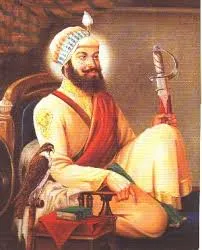
Heartiest congratulations and countless blessings to the entire Sikh Sangat on the occasion of Bandi Chhor Divas and Diwali, the Festival of Lights.
Let us remember the sacred history of Sri Guru Hargobind Sahib Ji and strengthen our spiritual connection with Guru Sahib Ji on this auspicious occasion.
Emperor Jahangir Imprisons 52 Kings
Mughal Emperor Jahangir sent his armies to different regions to strengthen and expand his empire.
He ordered that any ruler who accepted Mughal authority should be allowed to remain free.
However, those who opposed his rule were either to be killed in battle or captured and brought before him as prisoners.
Following these orders, the Mughal army killed many kings during military campaigns and captured several others.
According to the historical account, a total of 52 kings were brought before Jahangir as prisoners.
Some of these rulers belonged to the hill states, while others were Rajput kings.
A plan was made to imprison these rulers in a heavily fortified location from which they would never be able to escape for the rest of their lives.
Jahangir's officials suggested that the prisoners should be confined in Gwalior Fort.
They argued that Gwalior Fort was one of the strongest fortresses in the region.
Moreover, because it was situated on a hill, enemies were reluctant to attack it.
After consulting his officials, Jahangir ordered all 52 kings to be imprisoned in Gwalior Fort.
He also commanded that none of them should be released until their death.
The Suffering of the Imprisoned Kings
After the 52 kings were imprisoned inside Gwalior Fort, slow-acting poison allegedly began to be mixed into their food.
The poison gradually weakened their bodies and could eventually cause their deaths.
When the imprisoned kings realized that there was seemingly no way for them to escape or survive, they gathered together to discuss their situation.
They concluded that only the Almighty could protect them now.
All the kings then began praying to God together.
Day and night, they remained absorbed in remembering the Almighty.
It is believed that when prayers arise from a sincere and devoted heart, they are surely accepted in the Divine Court.
At that time, Sri Guru Hargobind Sahib Ji, regarded by devotees as a divine embodiment of the Almighty, was present in this world.
To bring about the liberation and well-being of these imprisoned kings, Guru Sahib Ji set in motion a divine plan.
Jahangir's Illness and Chandu's Conspiracy
Emperor Jahangir became seriously ill.
According to the traditional account, even the most experienced physicians, Muslim scholars, and Sufi saints were unable to cure his illness.
Eventually, some spiritual men suggested that if a great holy person spent 40 days in seclusion, praying to Allah, the emperor's suffering might be relieved.
At that time, Chandu, who was hostile toward the Guru's household, was standing near Jahangir.
Chandu thought to himself that this would be an excellent opportunity to bring Sri Guru Hargobind Sahib Ji under Mughal control.
He believed that if Guru Sahib Ji came to the fort, he could arrange for him never to be released.
With this intention, Chandu addressed Jahangir:
"There is immense spiritual power in the house of Guru Nanak Sahib Ji. The Sixth Guru, Sri Guru Hargobind Sahib Ji, is presently seated on the sacred Guruship."
"If he comes here and offers prayers for you for 40 days, I believe you will certainly recover."
Chandu continued:
"And if you are looking for a quiet and secluded place for these prayers, where could you find greater peace than Gwalior Fort?"
At this point, the author raises an important spiritual reflection.
Some people say that Guru Sahib Ji was imprisoned.
But I ask: Who has ever been born in the three worlds who could truly imprison the Guru?
The Guru is the master of his own will.
Sri Guru Hargobind Sahib Ji had already heard the prayers of those suffering kings and had resolved to bring about their liberation.
The author describes this as a divine arrangement through which even the minds of Guru Sahib Ji's opponents were directed toward fulfilling his purpose.
Guru Hargobind Sahib Ji Arrives at Gwalior Fort
A letter was sent to Sri Guru Hargobind Sahib Ji on behalf of the Mughal government.
Jahangir's officials accompanied the letter and respectfully requested Guru Sahib Ji to spend 40 days praying at Gwalior Fort for the emperor's recovery.
Guru Sahib Ji accepted the request and departed from Sri Amritsar Sahib for Gwalior.
When Guru Hargobind Sahib Ji entered the fort, the imprisoned kings were in a state of deep despair.
They had almost abandoned hope of surviving and were spending their days in prayer and remembrance of God.
However, upon Guru Sahib Ji's arrival, their hearts suddenly experienced a deep sense of peace.
They felt as though the Almighty had finally heard their prayers and that they would soon be liberated from their terrible imprisonment.
During Amrit Vela, Guru Hargobind Sahib Ji bathed and began reciting Japji Sahib.
When the imprisoned kings heard the sacred recitation, they became completely absorbed in the divine words.
They felt as though the Almighty himself was speaking to them through the sacred Bani.
After the recitation concluded, the kings fell at Guru Sahib Ji's feet and became his devoted followers.
From that day onward, they listened to Gurbani and received Guru Sahib Ji's spiritual teachings every day.
Their hearts were filled with renewed faith, peace, and hope.
Forty Days Pass, but Guru Sahib Ji Is Not Released
Time continued to pass.
The agreed period of 40 days came to an end, but no official order was issued for Guru Sahib Ji's return.
At this point, the author draws a comparison with the present day, stating that governments continue to act in a similar manner.
He expresses concern that imprisoned Sikhs, known as Bandi Singhs, have served sentences far longer than those originally imposed upon them, yet their demands have still not received a satisfactory hearing.
Meanwhile, when the Sikh congregations received no news of Guru Sahib Ji's return, they became increasingly distressed.
They deeply longed for Guru Sahib Ji's darshan.
According to the traditional narrative, a divine event then began to unfold.
Emperor Jahangir started experiencing terrifying dreams at night.
Whenever he attempted to sleep, he felt as though someone was attacking or beating him.
He could neither sleep peacefully during the day nor find rest at night.
His condition deteriorated severely, leaving him mentally distressed and physically exhausted.
Sai Mian Mir Ji Helps Secure Guru Sahib Ji's Release
Meanwhile, Baba Budha Sahib Ji, Bhai Jetha Ji, Baba Bidhi Chand Ji, and other respected Sikh personalities met Sai Mian Mir Ji.
Together, they discussed ways to secure the release of Sri Guru Hargobind Sahib Ji.
At the same time, Jahangir's condition continued to worsen.
The emperor summoned Sai Mian Mir Ji and explained everything that had been happening to him.
After hearing his account, Sai Mian Mir Ji said:
"O Emperor! You have committed a grave mistake."
"You have confined a divine being in Gwalior Fort."
"Immediately issue an order for his release, and only then will your suffering come to an end."
Upon hearing these words, Jahangir immediately issued an order for Sri Guru Hargobind Sahib Ji to be released.
The 52 Kings Plead with Guru Sahib Ji
When the 52 imprisoned kings learned that Guru Sahib Ji was about to leave Gwalior Fort, they became heartbroken.
They felt that the only source of comfort, hope, and strength they had found during their imprisonment was now about to depart.
They thought to themselves that if Guru Sahib Ji left them behind, they would lose all hope of living.
With tears in their eyes, all the kings approached Sri Guru Hargobind Sahib Ji and fell at his feet.
They pleaded:
"Guru Sahib Ji! Please do not leave us behind."
"If you must leave this fort, please take us with you."
"Otherwise, we will be as good as dead while still alive."
"You are now our only hope and the only support that gives us the strength to continue living."
Guru Sahib Ji comforted them and said:
"Do not cry. We came here for your sake, and we will leave this place only after taking all of you with us."
Hearing these compassionate words, the kings were filled with renewed hope.
The Condition for Releasing the 52 Kings
Sri Guru Hargobind Sahib Ji then instructed the Mughal official to deliver a message to Emperor Jahangir.
He said:
"Go and tell Jahangir on our behalf that we will not leave this fort alone."
"These 52 kings will also leave with us."
When Jahangir received this message, he became deeply troubled.
However, faced with the situation, he eventually agreed to a condition.
The emperor declared that any prisoner who could come out of the fort while holding the hem of Guru Sahib Ji's robe would be allowed to go free.
When Sri Guru Hargobind Sahib Ji learned of this condition, he arranged for a special robe to be prepared.
The robe was made with 52 separate panels or trailing strips of cloth.
Each strip could be held by one imprisoned king.
Guru Sahib Ji instructed every king to hold one of the strips and walk behind him.
All 52 kings firmly held the 52 strips of Guru Sahib Ji's robe.
In this remarkable manner, Sri Guru Hargobind Sahib Ji walked out of Gwalior Fort with all 52 imprisoned kings.
The kings, who had once believed that they would never see freedom again, were finally liberated.
This event is remembered in Sikh tradition as Bandi Chhor, meaning the liberator of prisoners.
Guru Sahib Ji Returns to Amritsar on Diwali
One can only imagine the immense joy experienced by those 52 kings when they finally stepped outside the prison walls.
After enduring such a long period of suffering and imprisonment, they had regained their freedom.
Their happiness must have been beyond description.
Sri Guru Hargobind Sahib Ji then began the journey back toward Sri Amritsar Sahib.
Along the way, Guru Sahib Ji stopped at different places and continued offering spiritual guidance and teachings to the Sikh congregations.
When Guru Sahib Ji finally arrived at Sri Amritsar Sahib, the Sikh Sangat celebrated his return with great happiness and devotion.
To express their joy, the devotees lit lamps filled with pure desi ghee.
Soon, the entire area was illuminated with countless glowing lamps.
Light shone everywhere, creating an atmosphere of happiness, gratitude, and spiritual celebration.
According to the tradition, the day of Guru Sahib Ji's arrival coincided with Diwali, the Festival of Lights.
Because Bandi Chhor Divas and Diwali are celebrated on the same day, Sikh congregations continue to observe this sacred occasion with great devotion, love, and enthusiasm.
The occasion reminds us of Sri Guru Hargobind Sahib Ji's compassion, courage, commitment to justice, and efforts to secure freedom for those suffering in captivity.
Heartiest congratulations to the entire Sikh Sangat on Bandi Chhor Divas and Diwali. May this sacred occasion bring peace, happiness, freedom, and Chardi Kala to everyone.
Join the conversation
Sign in to comment or join the discussion.






Loading comments…